Gaining perspective through the miradouros of Portugal

View of Cascais

Miradouro – in Portuguese, this refers to a place that offers a panoramic view, like a tower, balcony or a neighborhood park that sits higher than its surrounding areas. Lisbon, the capital of Portugal, is surrounded by seven hills, offering multiple lookout points or miradouros from which to capture some Instagram-worthy photographs.
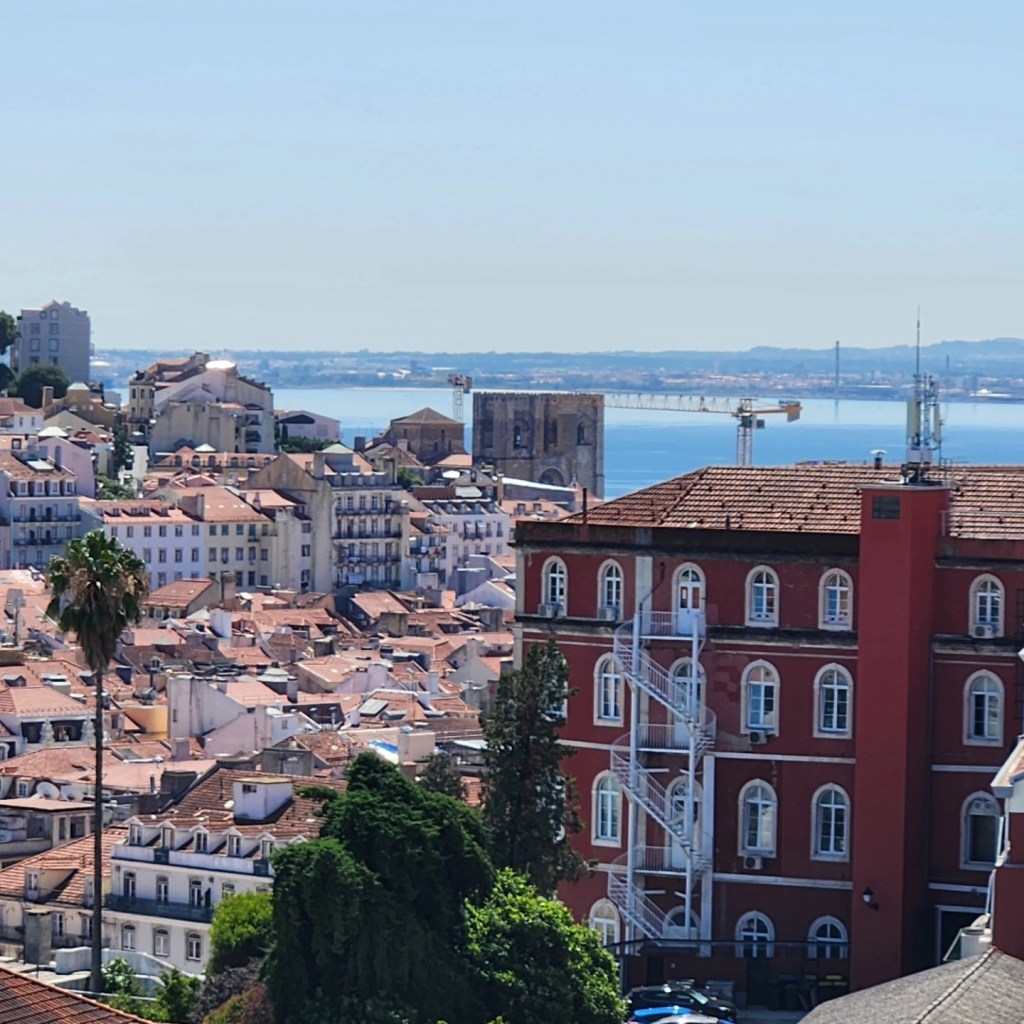
Lisbon from Miradouro SAo Pedro de Alcantara

Portugal is a beautiful country that is truly worth visiting and revisiting. I was grateful to set foot in Lisbon for the third time last summer, accompanied by a dear friend for a relaxing girls’ getaway. The very first thing we did was hop on a funicular that took us to Miradouro de Sao Pedro de Alcantara. Our eyes were treated to fantastic views of old town with Castel Sao Jorge on the hill that is almost diametrically opposite where we were standing. From this miradouro, one quickly appreciates the blue waters of the Tejo River that empties into the Atlantic, and a sliver of the harbor that launched numerous historic expeditions. The cathedral is also visible though its two towers seem diminutive from this vantage point.
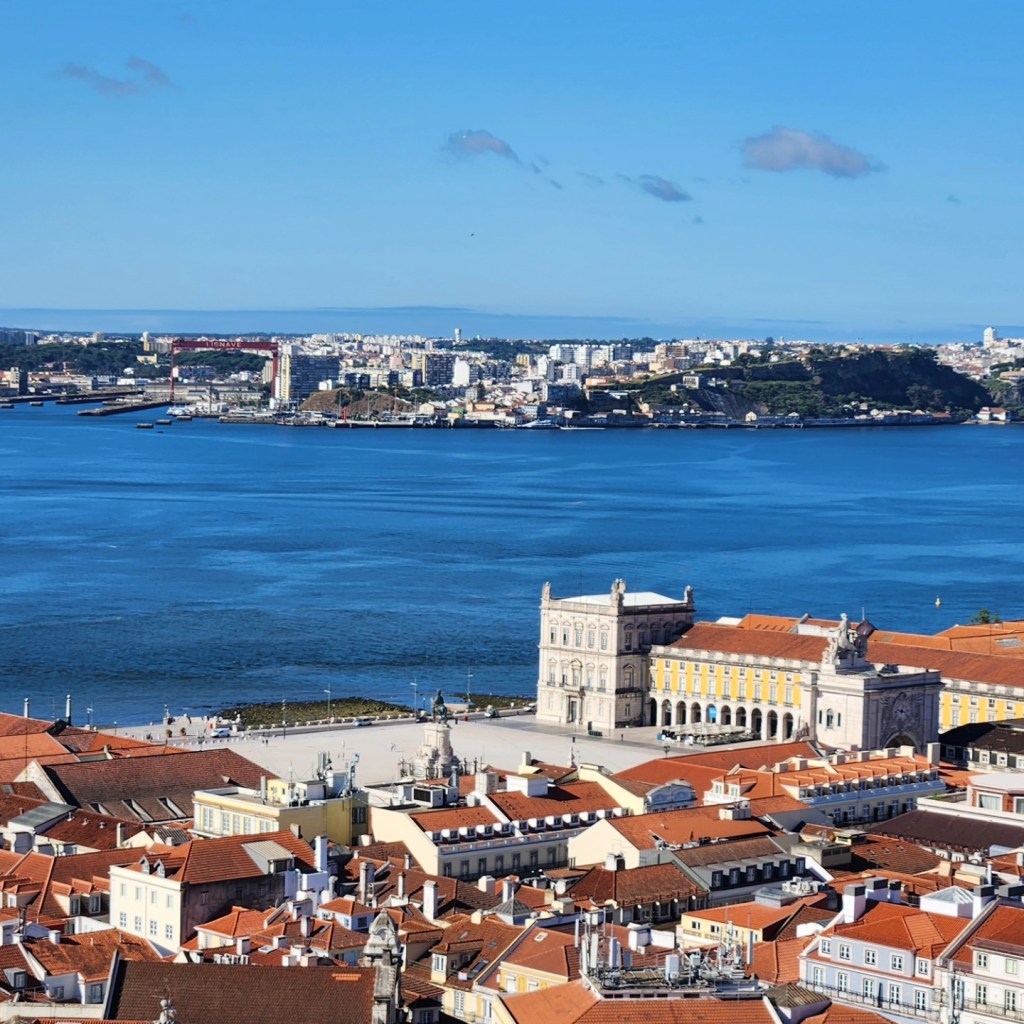
Lisbon and Tejo River viewed from Castel Sao Jorge

The following day, we found ourselves on the miradouro of Castel Sao Jorge, once more looking over the city of Lisbon and its harbor. Since we were now located in the Alfama district, the harbor appeared (and was indeed) much closer, and we could clearly admire Praca do Comercio where the royal palace once stood, prior to its destruction during the massive earthquake of 1770. This is a huge square, probably the biggest one in Lisbon, though it was obscured from our view when we were at the other miradouro. It is obvious that the things I see and appreciate are largely influenced by my vantage point.
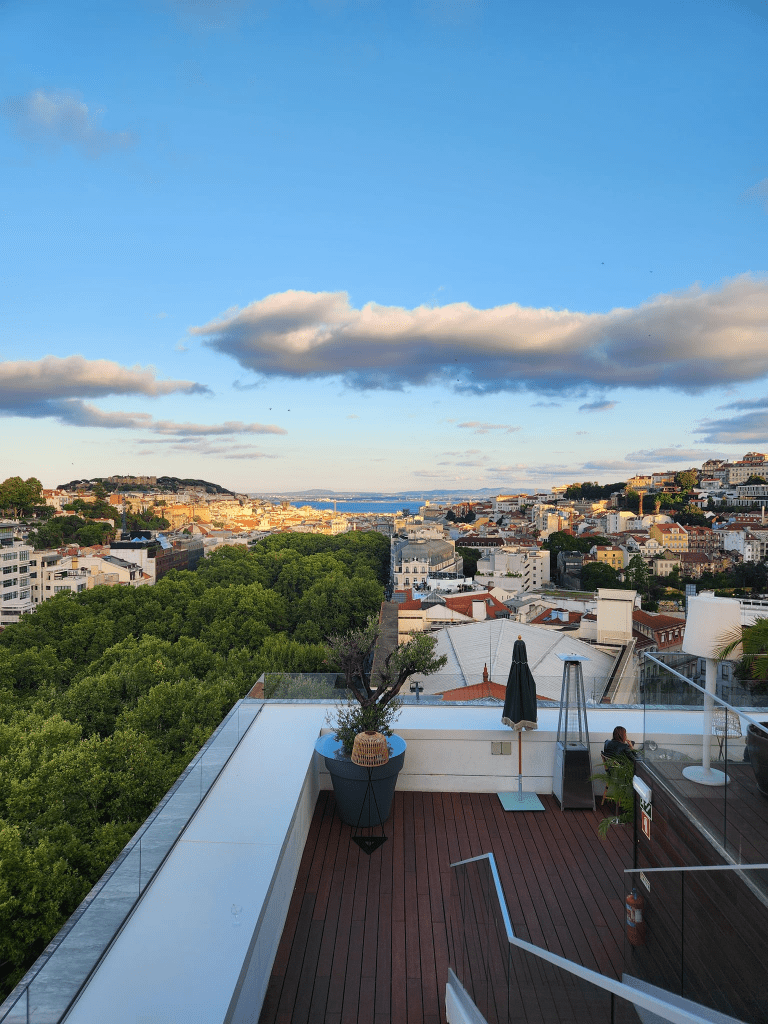
Lisbon viewed from the rooftop of Hotel Tivoli

I tend to forget this.  Up on my personal hill of knowledge and experience, I am tempted to think that I have the capacity to see the full (and biblical!) picture regarding a situation, conflict, or issue. My reflex is to consider my narrative as THE narrative; my view as THE view. But how do I love my neighbor who might be seeing things from another miradouro? Should I not at the very least listen with respect, and preferably not from a distance? I believe that love means caring enough to descend from the height of my thoughts, ideas, and opinions, walk over to where my neighbors are and view the city from their miradouro to better understand why they see things the way they do. While it is very likely that we will still see some things differently, I am certain that the love expressed in the process of building bridges glorifies God.

John 13:34-35

34 A new commandment I give to you, that you love one another: just as I have loved you, you also are to love one another. 35 By this all people will know that you are my disciples, if you have love for one another.”

Lisbon, viewed from Parque Eduardo

The miradouros of Lisbon remind me that in this world, we will misunderstand others and we will be misunderstood. There is such a longing in every human heart not only to be seen but also to be understood. There was a point in my life that I was deeply bothered because I felt so misunderstood by people who are significant to me. But then I recalled how Jesus showed meekness and patience though he was terribly misunderstood, not only by the Pharisees but even by his own followers and family. The Lord lovingly showed me that it was my arrogant desire to be correct (and for others to see that I am right), that fuels my need to be understood. By his grace, the Holy Spirit enabled me to shift my gaze away from self-pity and moved me towards repentance.  I asked the Lord to forgive me for the many times that I have misunderstood others – family, brothers and sisters in the faith, friends, co-workers.

Philippians 2:3

Do nothing from selfish ambition or conceit, but in humility count others more significant than yourselves.
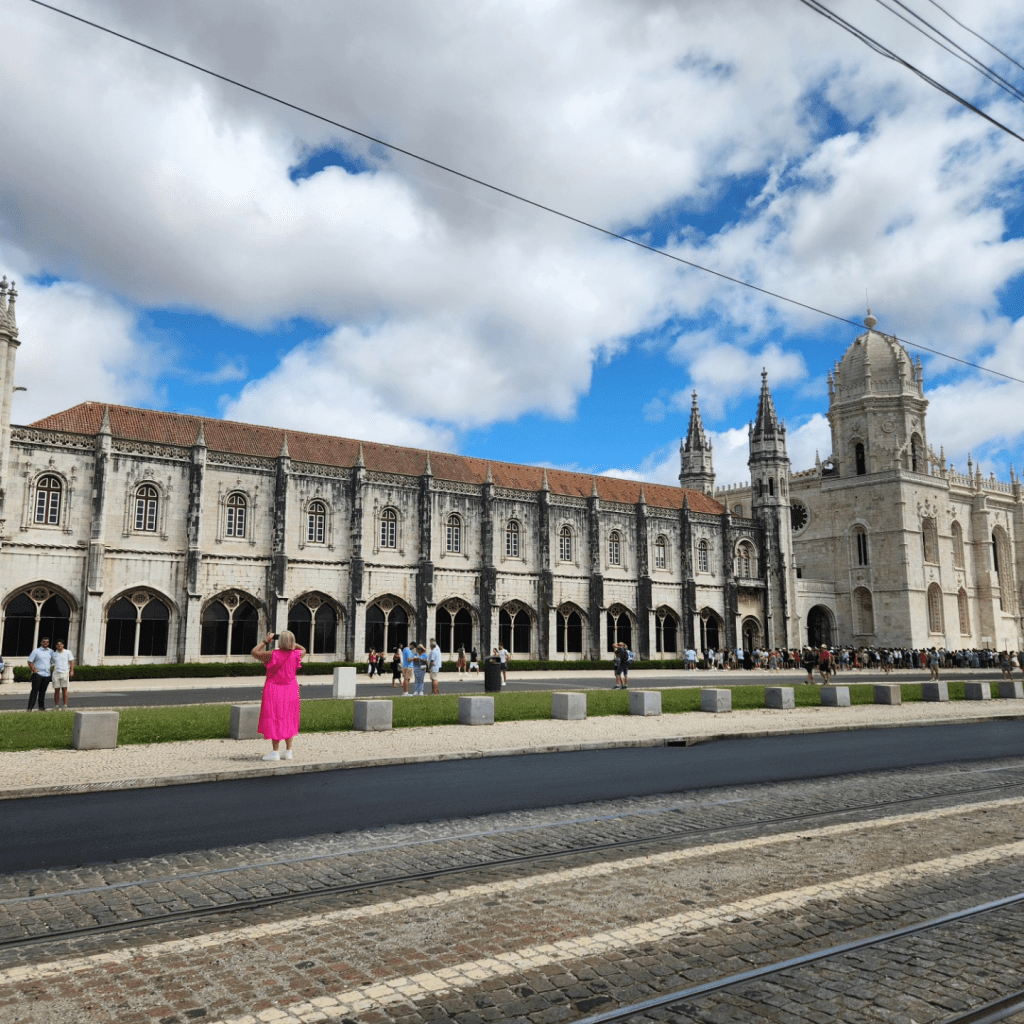
Monasterio Saint Jeronimus

This perspective has also influenced the way I pray and intercede. While I come before the Father with absolute confidence about my position as a child of His through the finished work of Christ on the cross, and though He has given me freedom to lament in His presence, I now surrender to Him my interpretation of situations that I bring before Him in prayer.  I acknowledge that especially in areas where my heart is heavily burdened, and human emotions are particularly strong, my role as intercessor is not to tell the King of the universe how to intervene based on my assessment, but primarily to affirm the Father’s authority over all things and to echo Jesus’ prayer “Your will be done on earth as it is in heaven.”

1 Peter 5:6-7

Humble yourselves, therefore, under the mighty hand of God so that at the proper time he may exalt you, casting all your anxieties on him, because he cares for you.

Recognizing that my perspective is incomplete and that only God’s knowledge is perfect has kept me abiding in Christ, especially in times of suffering. Suffering can distort our vision. When I am going through a difficult time, I find that my assessment of events, people and life in general is not the most objective. It’s like standing in front of those old carnival mirrors that reflect misshapen images where the head is too big, or the limbs are too short. It may not be that extreme, but at the very least, pain can cloud the lenses through which we view the world. It is often said that suffering changes people, though not always constructively. Sadly, there are many who have been embittered and hardened by suffering. Trauma has fractured their faith, and they want nothing to do with a God who allows suffering. I have also seen people who boast about their suffering, and their message to the world is “been there done that.” They may acknowledge God’s presence in their pain but they seem to have nurtured a hard and prickly heart, even as they navigate a life that is courageous on the outside but defensive and unteachable on the inside. Suffering, in and of itself, does not make us stronger. It is simply a tool. Ultimately, it is God who transforms us, as we respond in faith and surrender to His will. Without humility, it is impossible to suffer well or suffer in a way that glorifies Him. And that is why we run to Jesus and seek His grace. Only He can use the tears we shed to wash the scales off our eyes so that we can see that our Good Shepherd remains ever so close to us in our highest peaks and deepest valleys.

In my current season of pain, the miradouro I’m standing on may not allow me to see all that He is doing now or what He will do in the future. But it is enough for me to know that He who heals and restores will never leave me nor forsake me.
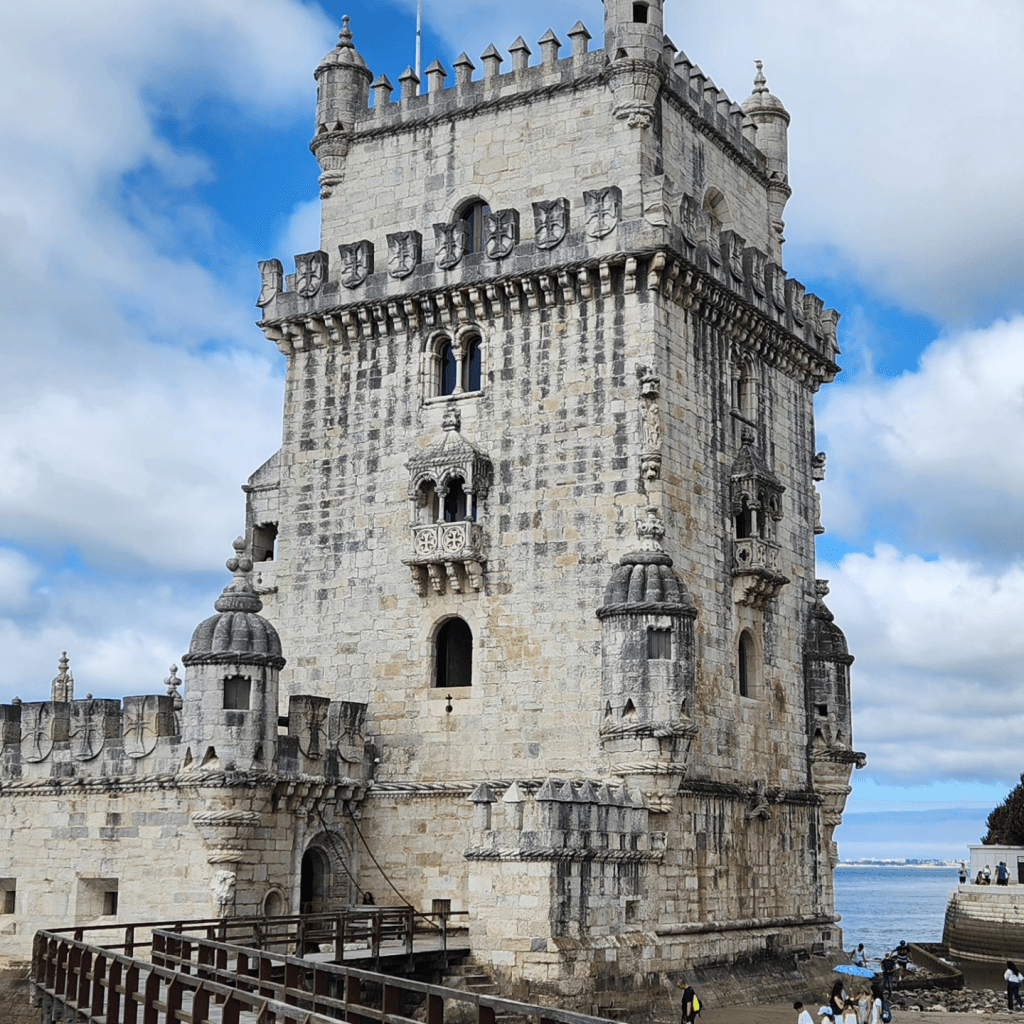
Belem Tower

Psalm 73:23-26

23 Nevertheless, I am continually with you;
    you hold my right hand.
24 You guide me with your counsel,
    and afterward you will receive me to glory.
25 Whom have I in heaven but you?
    And there is nothing on earth that I desire besides you.
26 My flesh and my heart may fail,
    but God is the strength[a] of my heart and my portion forever.
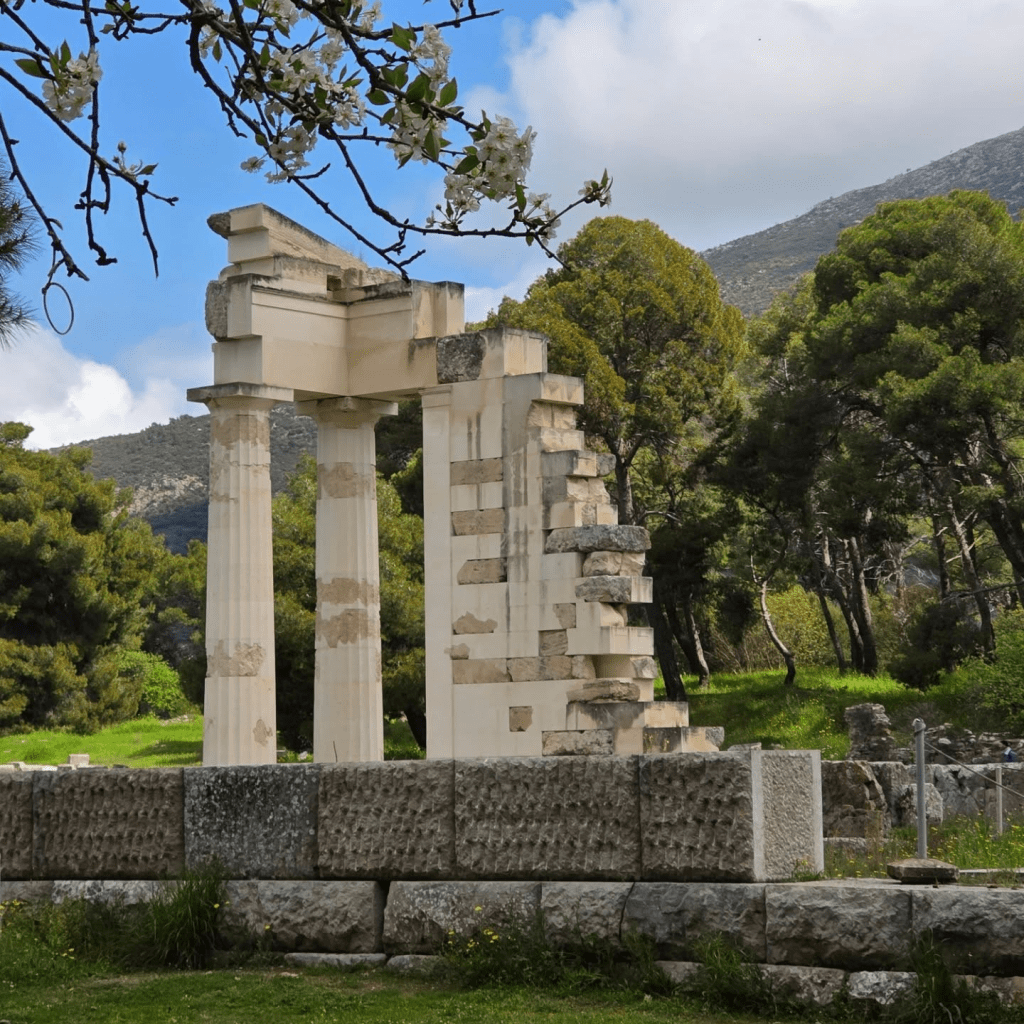
Ancient Greek ruins and the God who makes us new

Psalm 71:19-21

19 Your righteousness, O God,
    reaches the high heavens.
You who have done great things,
    O God, who is like you?
20 You who have made me see many troubles and calamities
    will revive me again;
from the depths of the earth
    you will bring me up again.
21 You will increase my greatness
    and comfort me again.

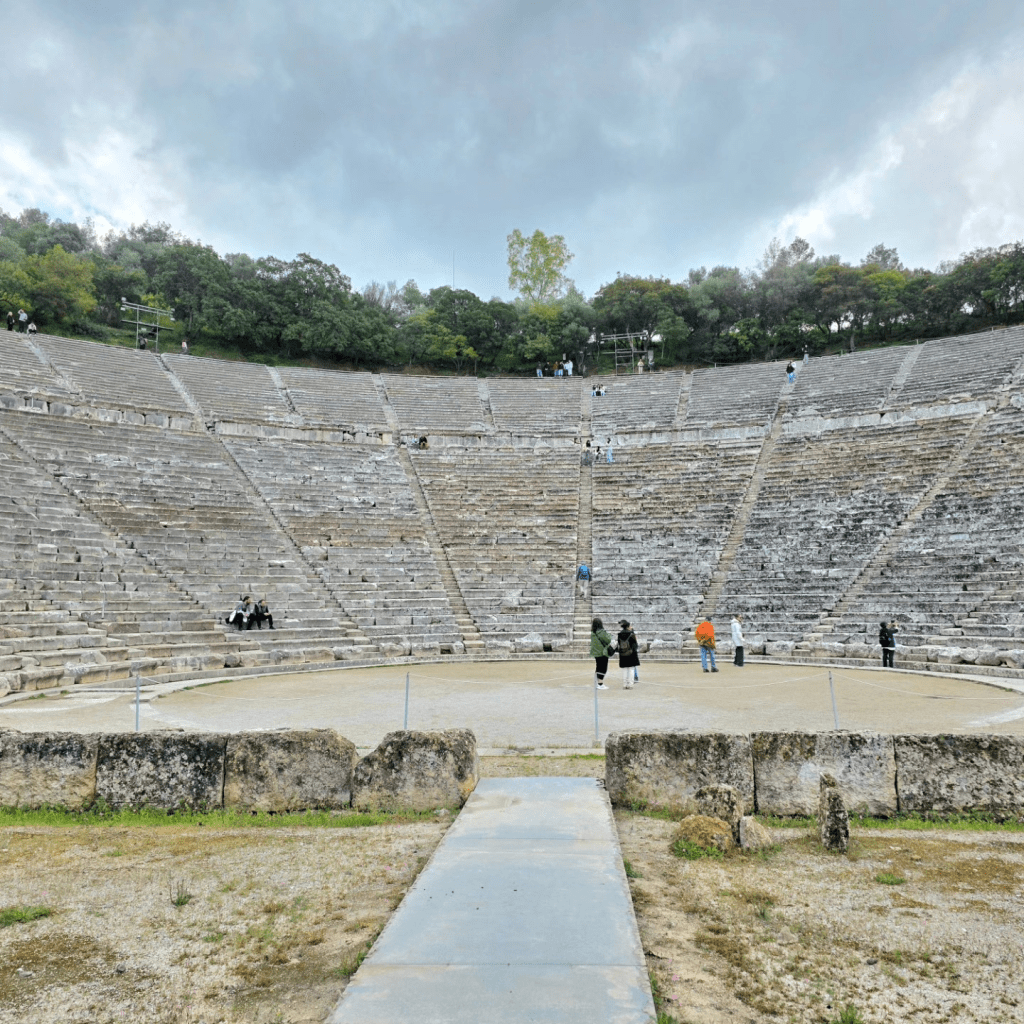
Epidaurus Archaeological Site

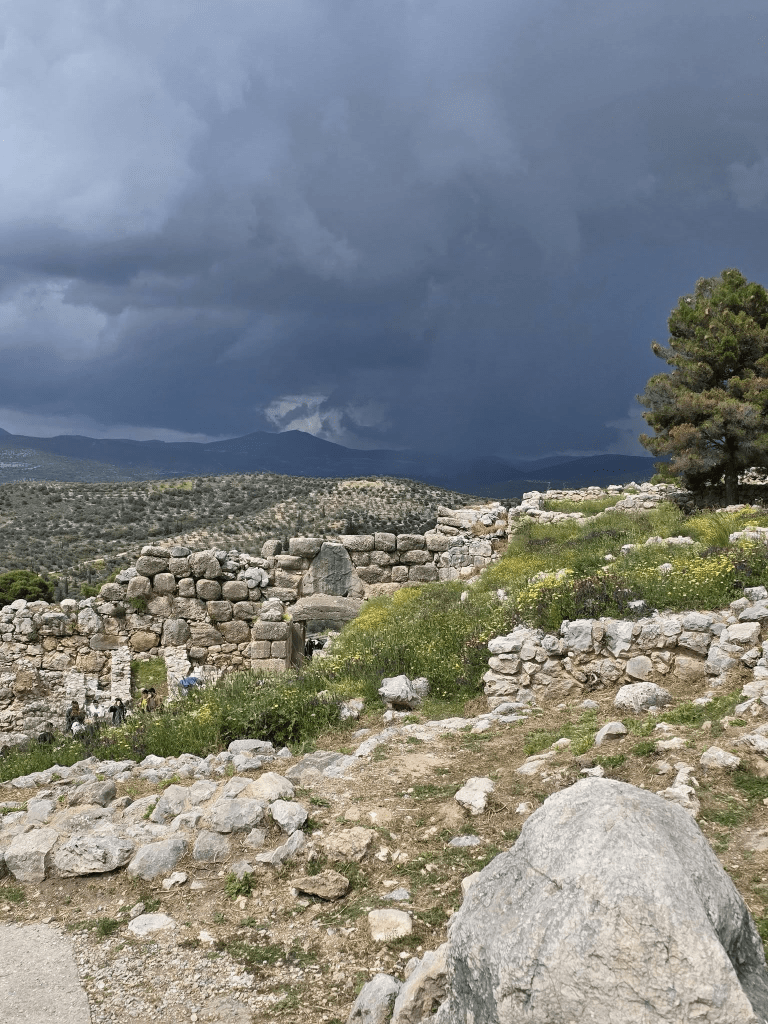
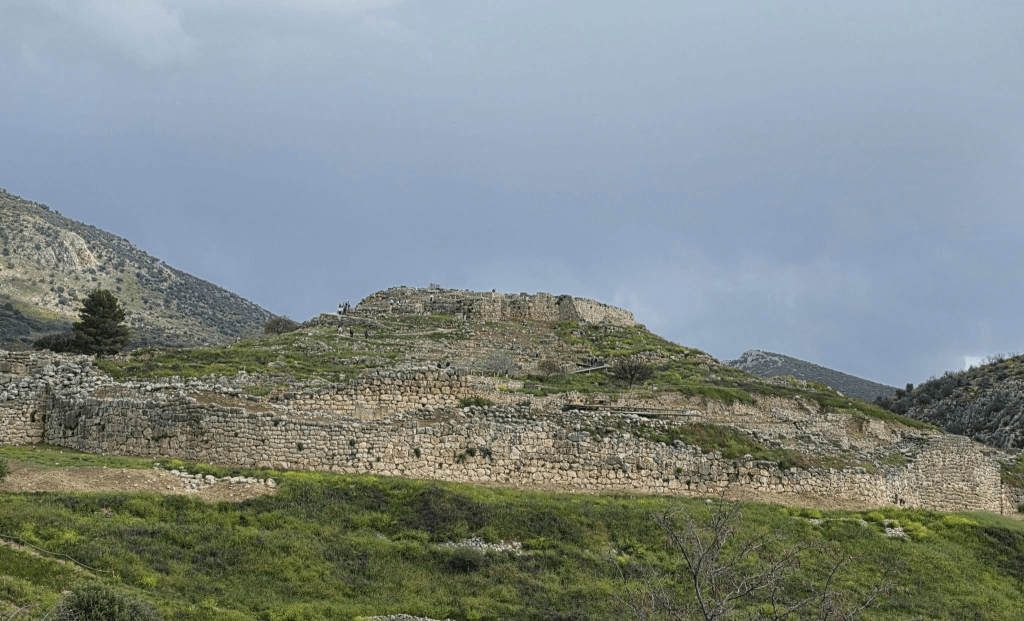
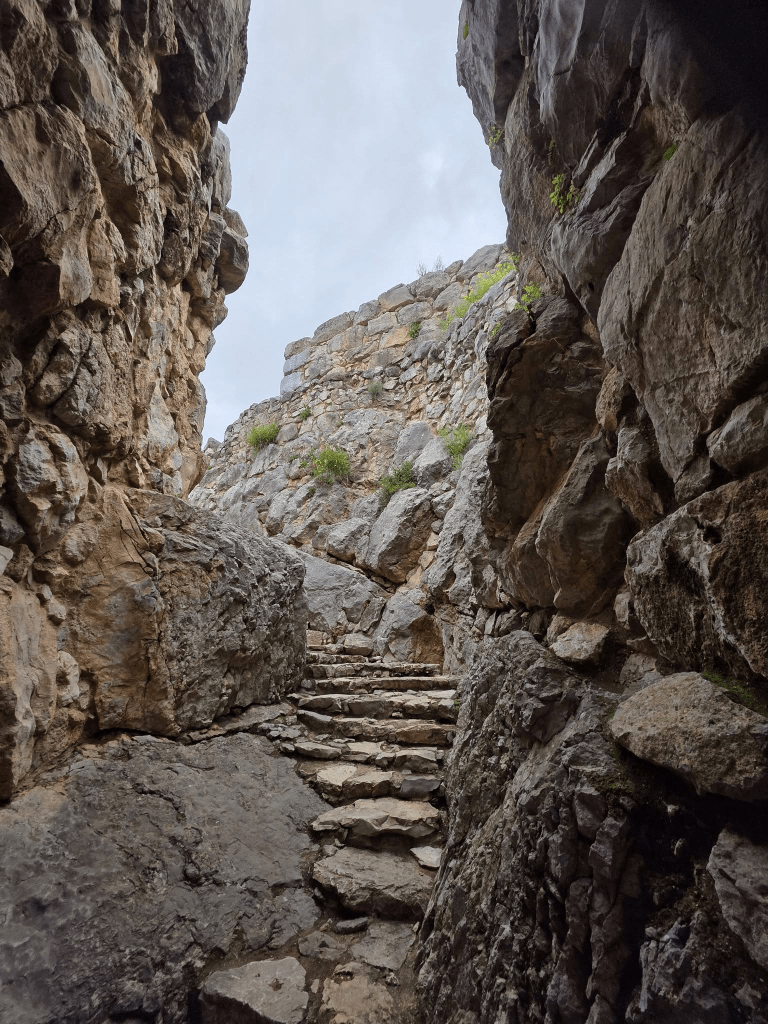
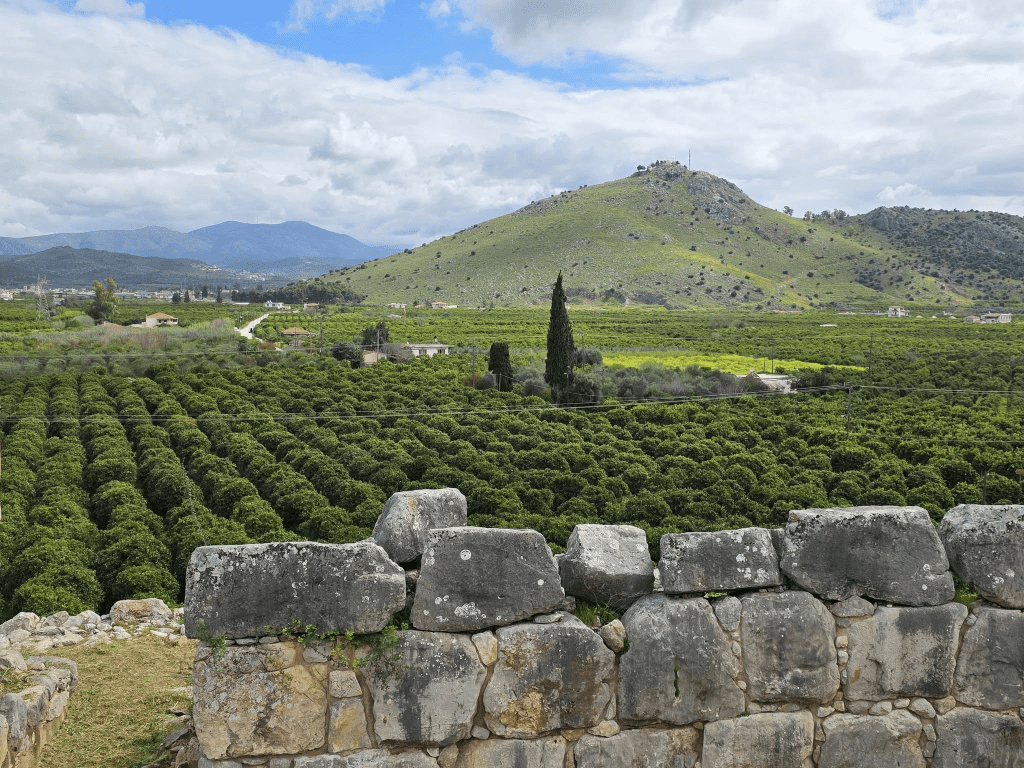
Greece is so old and steeped in history. A short vacation recently provided a meaningful excursion to the past, like flipping the pages of recorded European civilizations to some of the earliest chapters. Upon landing in Athens, we rented a car to explore the Peloponnese region, south and west of the capital. The Peloponnese is a large peninsula attached to the mainland via the Isthmus of Corinth. The city of Nafplio, the original capital of modern Greece, became our homebase, from which we drove daily to various parts of the Argolis region. Between the fortresses in Nafplio, the theater of Epidaurus, the Mycenaean archaeological sites and the cyclopean walls of Tyrins, we admired a lot of ruins and had an absolutely wonderful time. As we were touring these sites, we also tried our best to recall lessons in history and classic literature so that we can relate the places we’re visiting with events and characters, whether factual or fictional.

Mycenaean Archaelogical Site

Aside from the fact that it is educationally enriching, immersing in a labyrinth of history is something that I always find to be good for the heart, as it encourages reflection. It could be said that dilapidated walls and collapsed arches are sobering reminders of the temporary nature of human achievements. After all, these are remnants of cities, even empires, that once stood grand and mighty but are now worth only an entrance fee of a few euros. But more importantly, and on a more personal level, these places remind me that we all have something that now lies in ruins. It may be a career that has ceased to be viable, a possession that has been taken away, a body that has lost its strength, a privilege that has been denied, a relationship that is now a distant memory, or a vow that has been broken. Don’t we all have pillars and foundations that have fallen apart, at some point in our lives?

Ancient Theater of Epidaurus

1 Peter 5:10–11

And after you have suffered a little while, the God of all grace, who has called you to his eternal glory in Christ, will himself restore, confirm, strengthen, and establish you. To him be the dominion forever and ever. Amen. (ESV)

Mycenae
The Wall of Tyrins

Hope is ignited when I think about what God does to the rubble left by our personal circumstances and choices. The composer of Psalm 71 proclaims that He is a God who revives. In the letter of the apostle Peter, he encourages suffering believers that God himself will restore, comfort, strengthen and establish them. Because God’s word is true, brokenness is but a prelude to His restorative work for all who seek and ask. As a loving, caring, and wise Father, God does not abandon us in our shattered state. He does break us to make way for greater grace, much like a surgeon who has to cut through normal, healthy tissue, to remove a cancer and bring healing. He does not leave His work unfinished (Phil 1:6).

Orange orchards in Tyrins

Going back to the ruins of ancient Greece, it was also very interesting to observe the efforts being devoted continuously to the preservation of artifacts. I appreciate knowing that resources (including our entrance fees) are being utilized to keep history alive for the next generations. It is a worthwhile endeavor to protect these precious archaeological finds and maintain them as close as possible to their original state, Initially, I thought this would be a great analogy for God’s restorative work in us. And while it does reflect His patience and perseverance to some degree, it definitely pales in comparison, because God’s purpose goes beyond preservation.

Ancient Agora of Athens

2 Corinthians 5:17–18

Therefore, if anyone is in Christ, he is a new creation. The old has passed away; behold, the new has come. All this is from God, who through Christ reconciled us to himself and gave us the ministry of reconciliation; (ESV)

When my Father looks at the ruins of my past or present realities, He sees something other than mistakes, regrets, and failures. Because of the redemptive work of Christ, He sees me as a new creation; His own child who can be transformed to bear His image in this fragile world. That is why he doesn’t just scrub off my surface mildew, or patch up my holes, or repaint/refinish me back to my “original state of splendor”. Ironically, don’t you think sometimes these are all we ask for when we pray? We want Him to take away all that is unpleasant, fix everything that’s broken and bring us back to the good old days. These prayers are honest, yet short-sighted. Praise God that He gives us more than we can ask or think of.

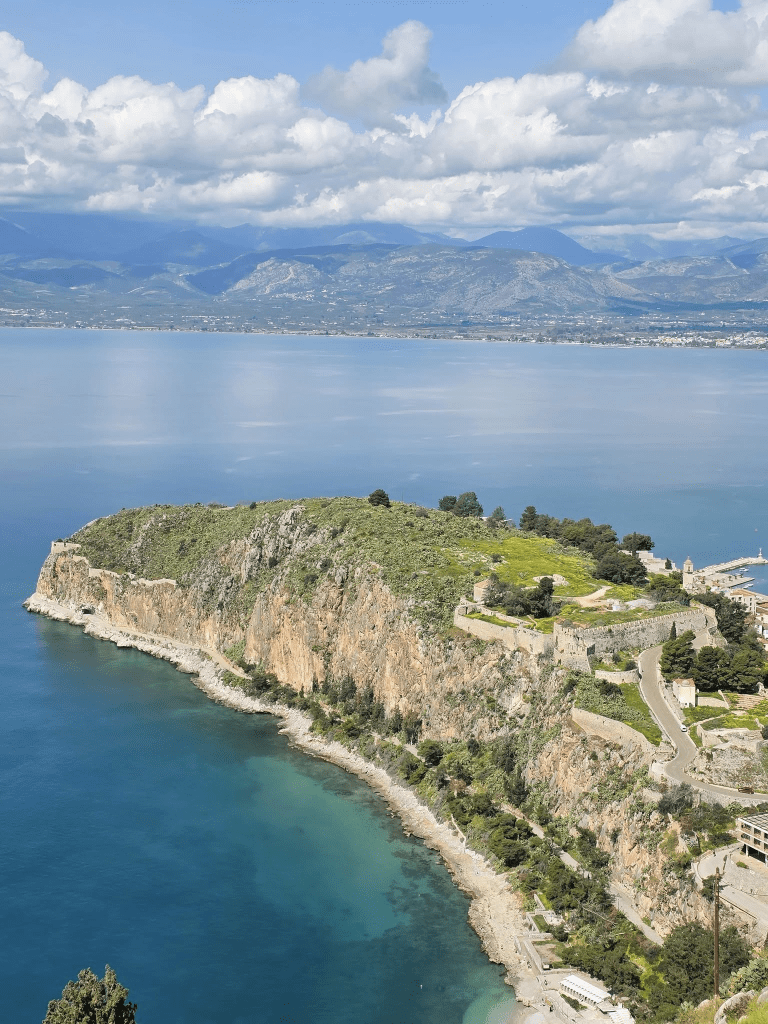
The Argolic Bay viewed from Palamidi Fortress

His mercy surpasses my incomplete and often inaccurate interpretation of what is true and what is good, and He responds by always drawing me to repentance (i.e. what I need the most in the first place). He sits with me in the rubble of questions about why things are the way they are for people that I love. And His presence reminds me how I need Him so much more than I need answers to my questions. Through the work of His Spirit, He renews my heart and proceeds with the process of changing me – a process that I can surely depend on because of His faithfulness, not mine. It doesn’t mean He pulls me out of all my physical and situational ruins; but He reassures me of His ever-abiding presence and breathes new life into my weariness, so that I can once again see through eyes of faith, that He is the God of the universe and the God of all ages. The God who walks among us in the ruins of our circumstances is also the God who makes all things new.

Ephesians 3:20-21

20 Now to him who is able to do far more abundantly than all that we ask or think, according to the power at work within us, 21 to him be glory in the church and in Christ Jesus throughout all generations, forever and ever. Amen.

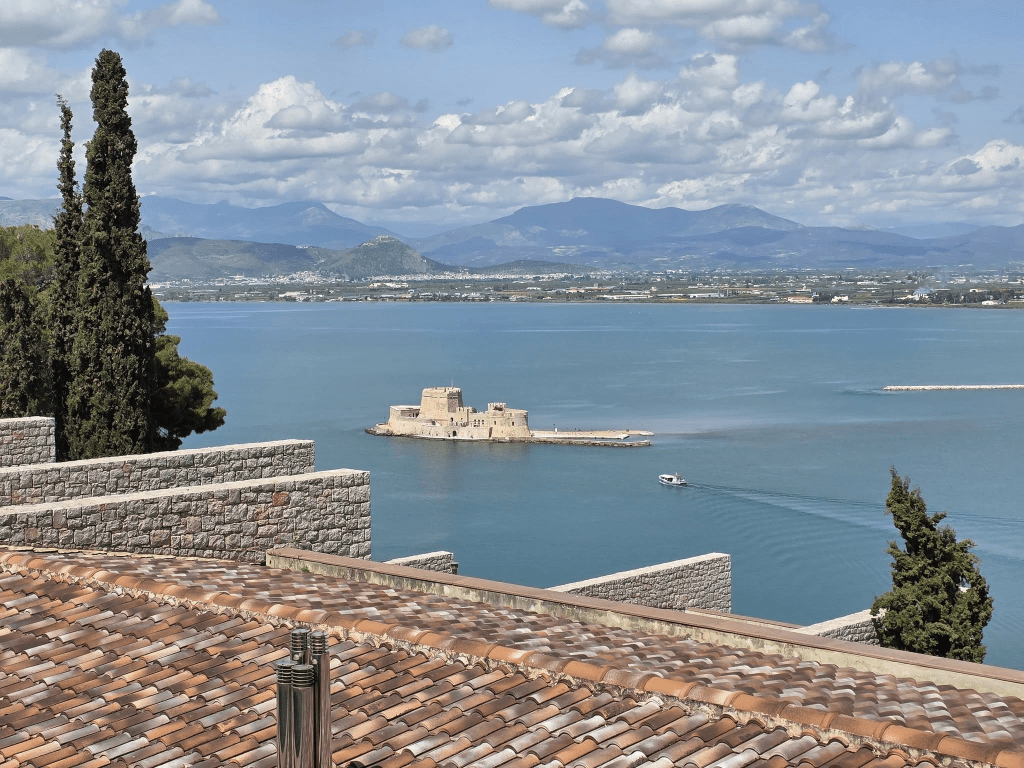
Bourtzi Fortress, Nafplio, Greece

Solitude on the Seine

Gare Saint Lazare at eight in the morning is bustling with locals and tourists. The flow of humanity in the Paris Metro system is an interesting, albeit chaotic tempo during morning rush hour as hordes of people weave through tunnels and stairways. Meanwhile, at street level, Parisians pedal their electric bikes to work, navigating through Hausmannian boulevards along with the cars and buses. It is no wonder that a lot of my friends are totally baffled as to why I frequently choose Paris as a place for rest and relaxation. (And by rest, I am not referring to the post-prandial stupor due to a massive consumption of croissants and macarons). But seriously, it is not that hard to find an oasis of silence and solitude even in a city as big and as popular as Paris.

Be still and know that I am God. I will be exalted among the nations. I will be exalted in all the earth. Psalm 46:10

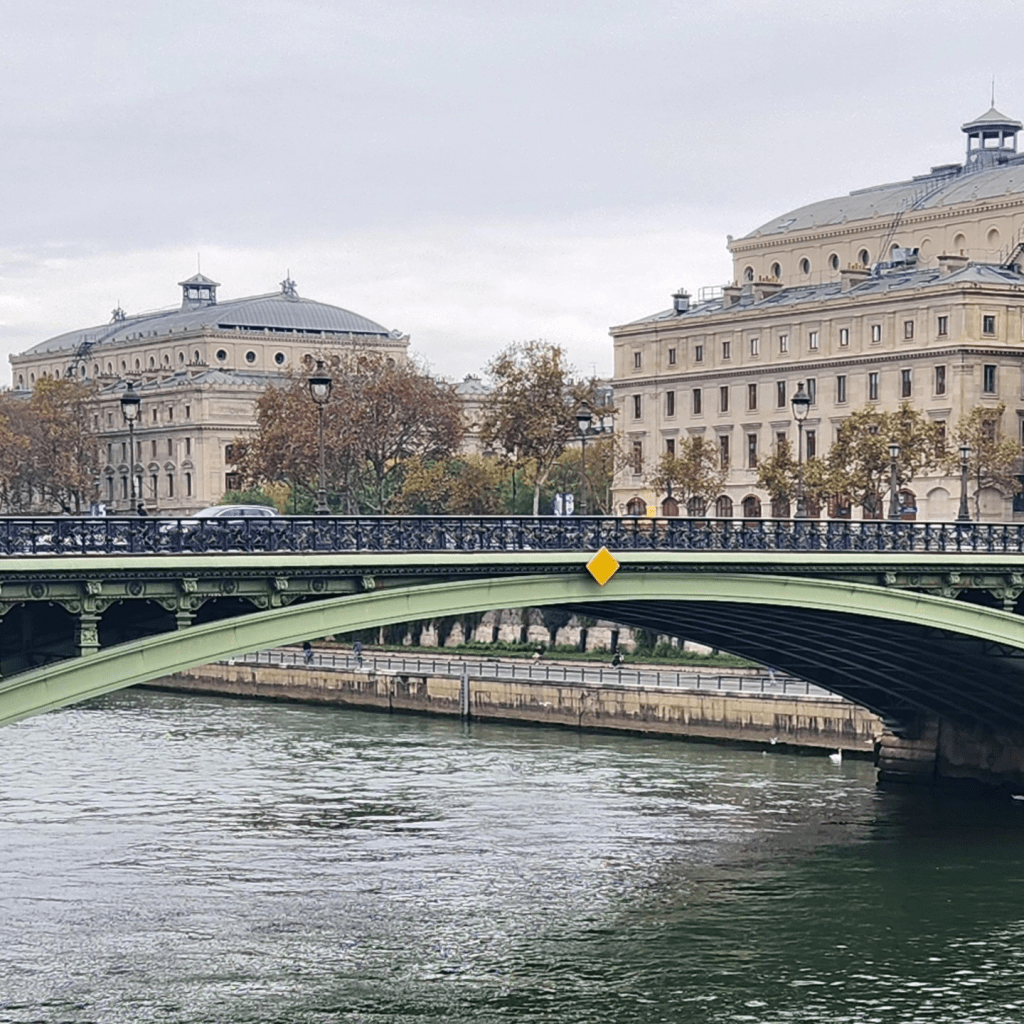
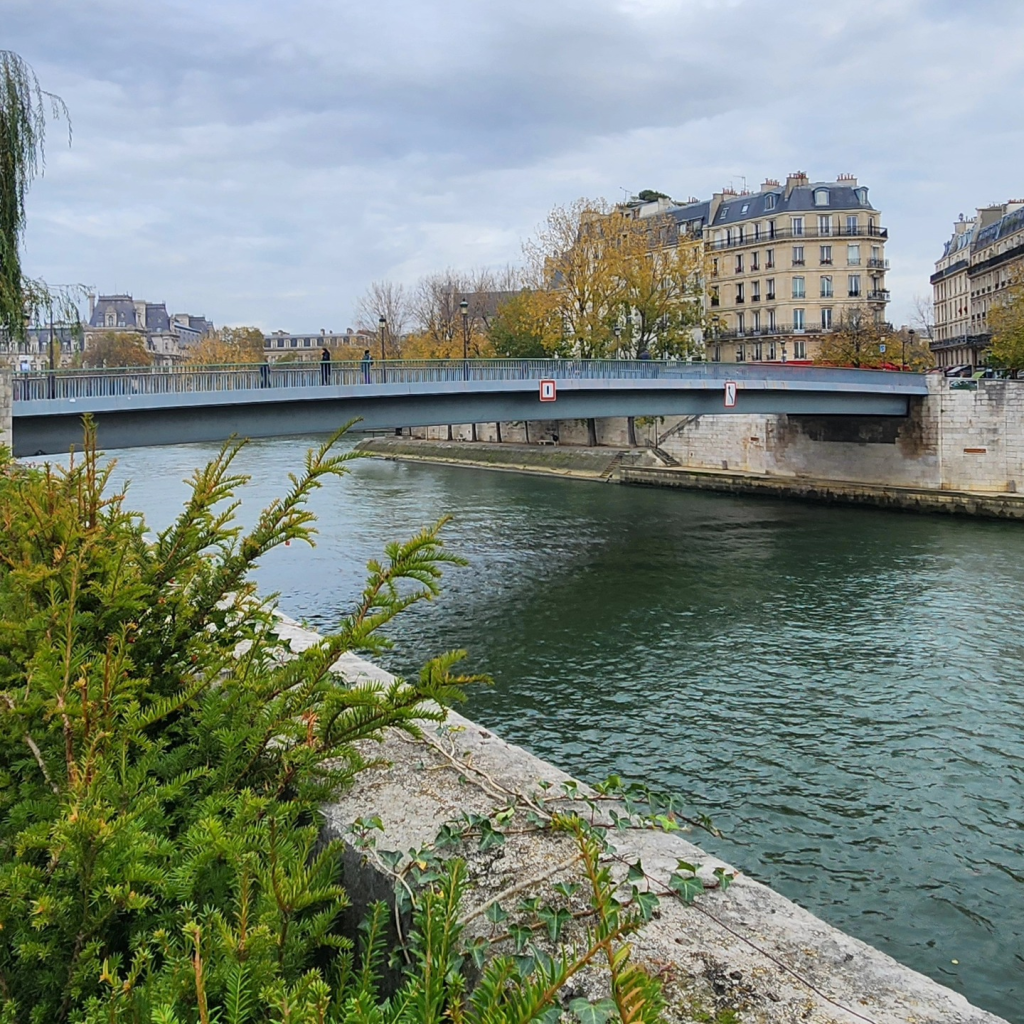
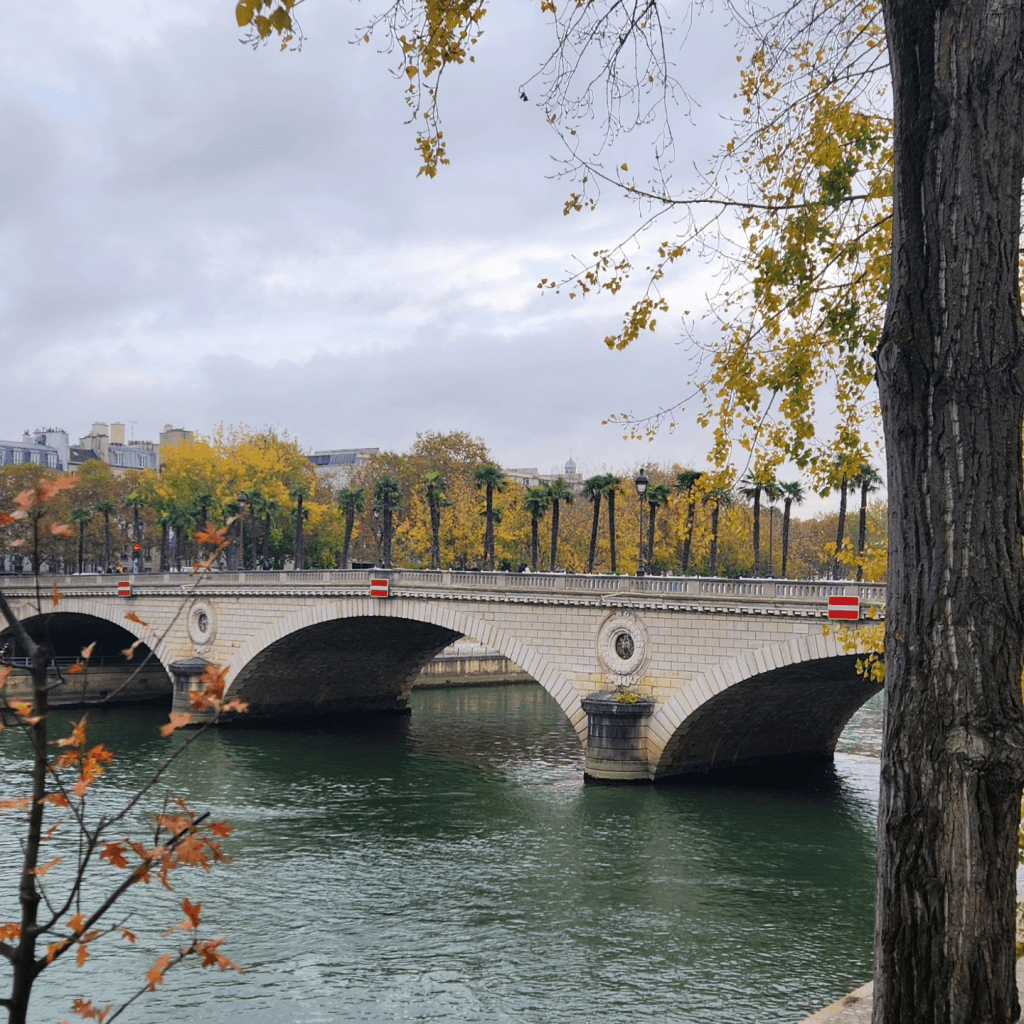
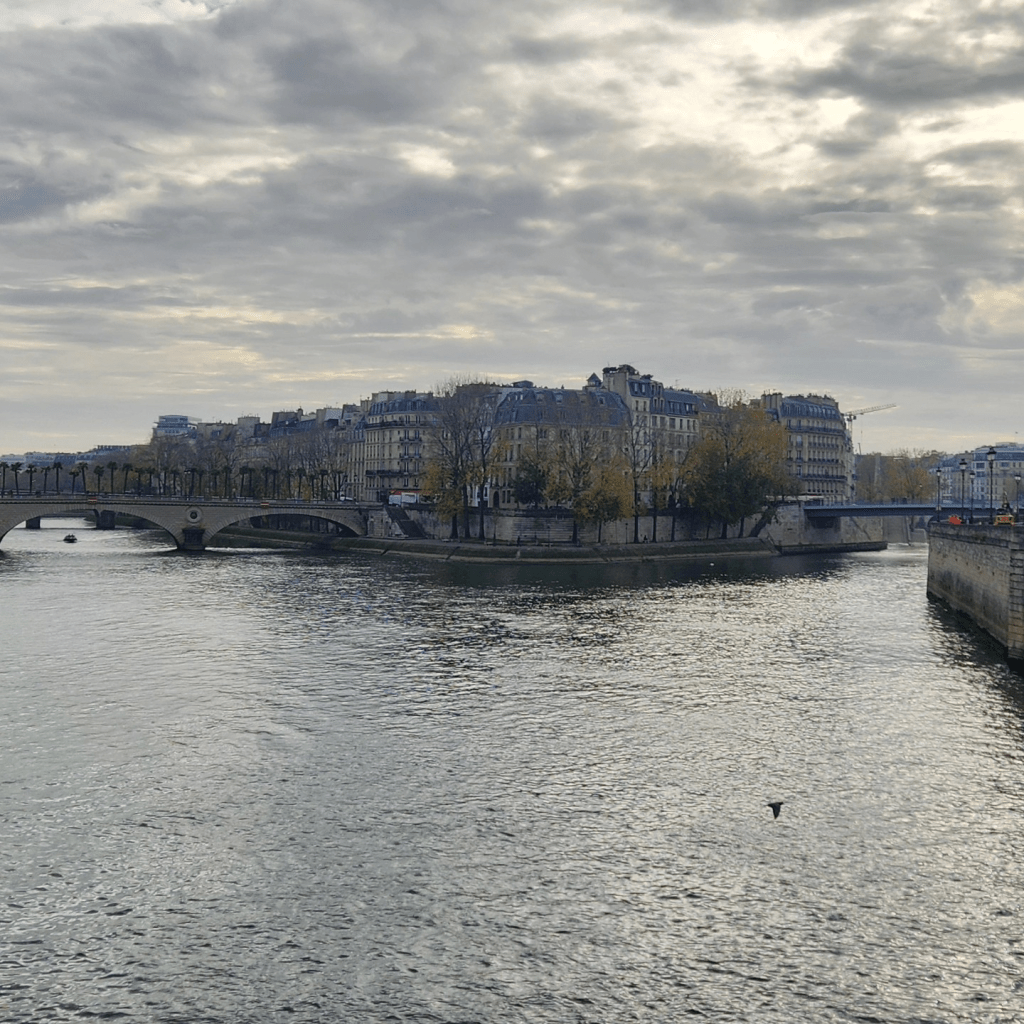
My friend and I hop on the M14 to Chatelet to escape the morning madness and to explore the little island where Paris was first established – the Ile de la Cite. This is the historic heart of this city and while the rebuilding of Basilique Notre Dame continues in the background, I lay my eyes once more on the soul of Paris – the Seine and its lovely bridges. There’s Pont Notre Dame and Pont Au Change from which to admire the Conciergerie – a grand structure that hosted Marie Antoinette during her final days. There’s Pont Louis Philippe, rather strangely decorated with potted palm trees, the unassuming iron bridge Pont Au Double connecting the cathedral to the left bank, and Pont d’Arcole, made famous by one of Napoleon’s victories, connecting Ile de la Cite to Hotel de Ville (city hall) on the right bank.  I think my favorite bridge in this arrondissement is Pont Saint-Louis which connects Ile de la Cite with the charming Ile Saint-Louis, home of the decadent Berthillon ice cream.

For God alone, O my soul, wait in silence, for my hope is from him. Psalm 62:5

In many cities, people cross bridges to simply get from one place to another. Not in Paris though. Here, a bridge could be a destination in and of itself; a place to pause and take it all in. Every bridge is an unofficially designated viewing platform from which to admire a part of the city, to look over the Seine and everything that lines its banks. I believe what I love most about the bridges of Paris is that they give me perspective, in such a way that as I’m looking out, I’m also looking in – not in futile introspection but in meaningful reflection. This is the kind of rest that doesn’t lull me to sleep but a rest that awakens me to live more fully for the glory of God, as He fills me with awe and gratitude. There’s something about being transported out of the daily routine of work and life that allows a silence through which God speaks more audibly. He has much to say and even more love to give.  
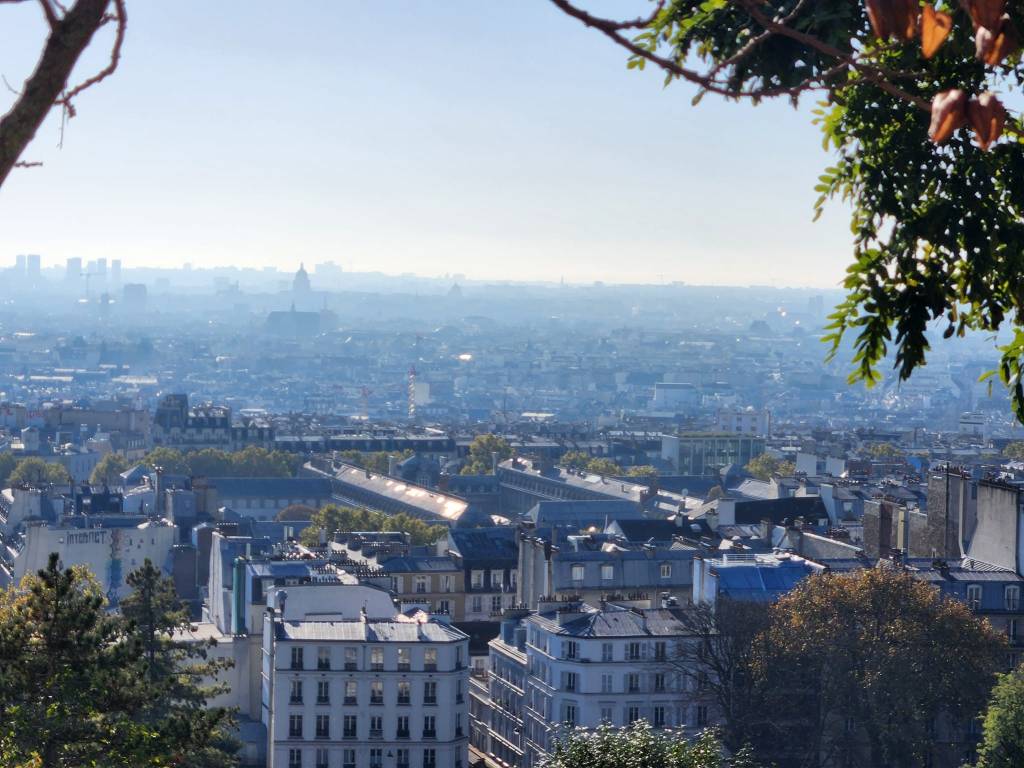
From my spiritual viewing platform, God reveals areas of restlessness in my heart, where the idols  efficiency and productivity are still exalted by my human nature; areas where His sanctifying grace is very much needed on a daily basis. In His mercy, He stills my anxious thoughts about prayers for loved ones that are still unanswered, work that remains unfinished, changes that have yet to take place in me and those around me. But before I could lament “how long, Oh Lord…”, I am comforted by the truth that “The Lord is not slow to fulfill his promise as some count slowness, but is patient toward you, not wishing that any should perish, but that all should reach repentance.” 2 Peter 3:9 In loving kindness, He redirects my gaze toward Him and through the gospels, I see a Savior who was intentional yet never in a hurry. Jesus was fully present to those around Him – listening, mentoring, feeding, healing, teaching, serving, traveling, celebrating, sacrificing, and always loving. He built relationships, not checklists. He was moved with compassion and was not constrained by a calendar. Scripture tells us that there’s no one more purposeful than Christ who came solely to do the will of the Father who sent Him. Amazingly, there’s also no one who loved others better, with a love that is patient and kind.
In the stillness of the Seine and the silence of a neighborhood whose shops are still closed except for a boulangerie, my heart is drawn to worship Him right where I’m standing. No need to think of where to go next. Being all there is what matters for now. It is only when I am completely abiding in Him that I can love others unreservedly wherever life’s bridges take me. Time is never wasted when I linger, listen, even lament, and above all, revel in the beauty and mystery of the story that God is actively writing.

Oh Lord, make me know my end and what is the measure of my days; let me know how fleeting I am! Psalm 39:4

The day after I returned from Paris, I received news that a niece in the Philippines just passed. She had been dealing with a chronic illness but her passing was still very sudden and unexpected at only forty years old. But because she was a faithful follower of Christ, I know she has found heavenly rest in Jesus, free from all her physical ailments. There’s reason to rejoice but her passing did prompt me to consider the brevity of life. Just how many more bridges I have yet to cross, only the good Lord knows. And the fact that He knows is good enough for me.

The heart of man plans his way but the Lord establishes his steps. Proverbs 16:9

Love Of God
Poet: Horatius Bonar

O love of God, how strong and true!
Eternal, and yet ever new;
Uncomprehended and unbought,
Beyond all knowledge and all thought!

O heavenly love, how precious still!
In days of weariness and ill,
In nights of pain and helplessness,
To heal, to comfort, and to bless!

O wide-embracing, wondrous Love,
We read Thee in the sky above;
We read Thee in the earth below,
In seas that swell and streams that flow.

We read Thee best in Him who came
To bear for us the cross of shame,
Sent by the Father from on high,
Our life to live, our death to die.

O Love of God, our shield and stay
Through all the perils of our way;
Eternal love, in thee we rest,
Forever safe, forever blest.

From fear to faith: a walk along the walls of Avila

Isaiah 41:10 Fear not, for I am with you; be not dismayed, for I am your God;
I will strengthen you, I will help you, I will uphold you with my righteous right hand.

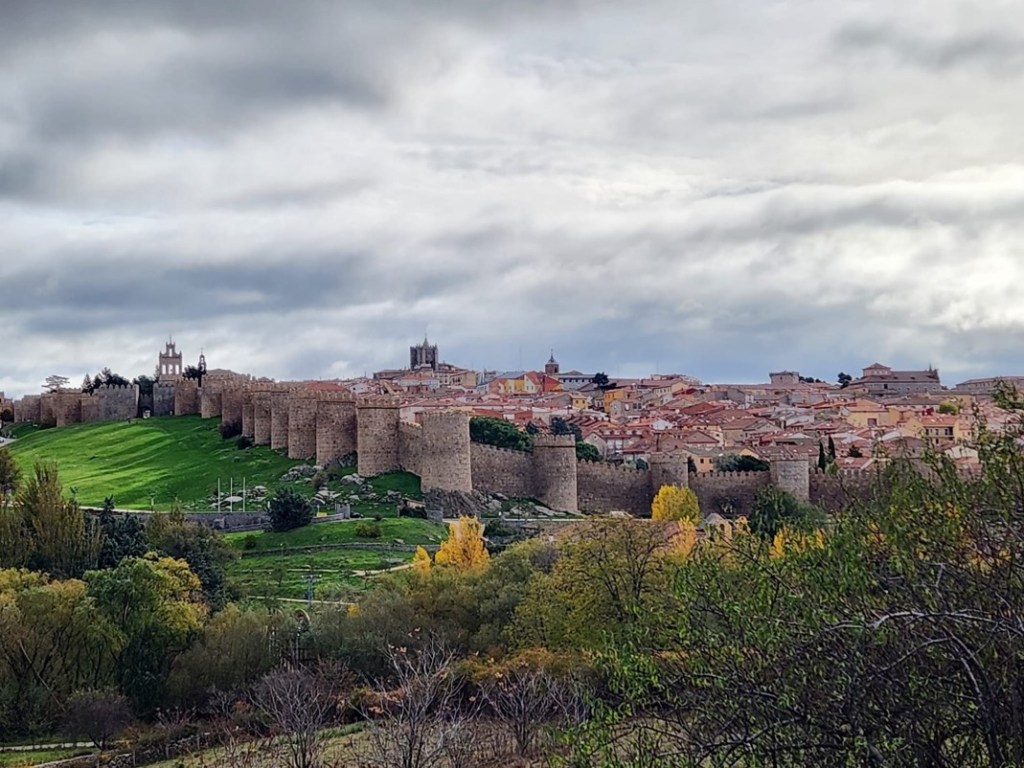
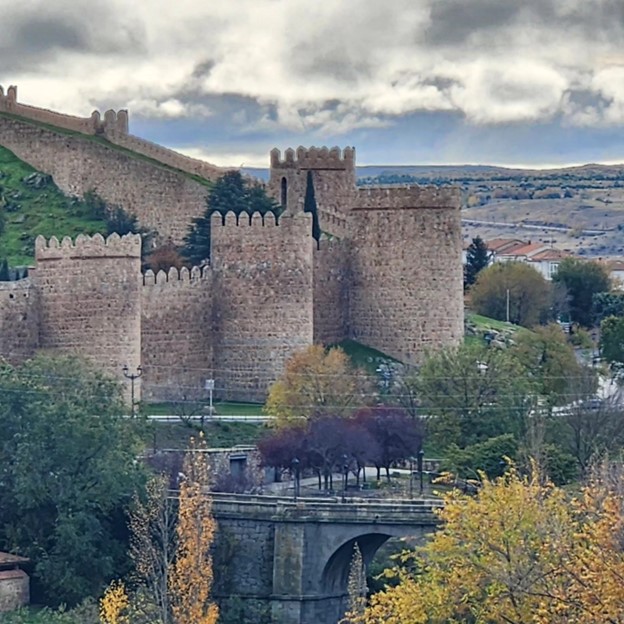
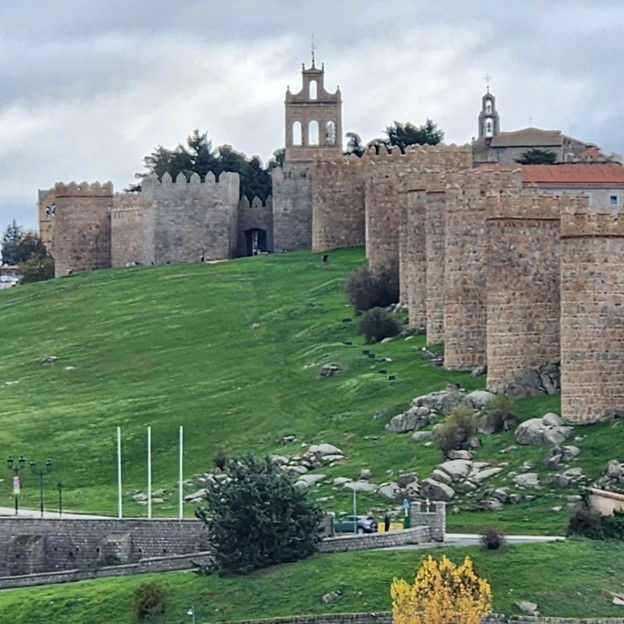
The historic city of Avila and its surrounding walls

I had the opportunity to visit Avila, a city not too far from Madrid, when me and my friend decided to fly across the pond for a one-week break from work in the fall of last year. I had long wanted to see this UNESCO world heritage site.  I had read that in all of Spain, Avila has the most remarkably preserved medieval wall structure with nine gates and more than eighty towers. It was built in the 11th century to defend the town from external threats and invasions. During those turbulent times in their history, a fortification that was three meters in thickness and more than twelve meters high was necessary to protect the lives of the citizens of Avila. Within these walls, they found safety.

Crossing the Adaja River to the old town of Avila

Proverbs 29:25 – The fear of man lays a snare, but whoever trusts in the Lord is safe.

We all need a place where we can feel safe. It is true that life is difficult, and conflicts abound in all aspects of human interaction. No one is immune to pain and suffering. Sadly, we live and make choices that are often driven by fear and anxiety. Consciously or subconsciously, we build our own walls and defenses to preserve ourselves, our privacy, and to limit our friendships with only those who agree with us.  While external, physical, and societal forces may pose a threat to our safety, sanity, and wellbeing, the consequences of a callous and self-seeking heart are far more serious. I am truly grateful for all the people and processes that work toward the protection of our lives, health and freedom. I value the resources that are at our disposal to promote health and prevent injury. However, if the preservation of myself and my safety becomes my main obsession; if I am always preoccupied with what could potentially offend me; if I am constantly on guard against what could hurt me, my heart will never learn the rest that Jesus promised to those who come to Him.

“Let nothing disturb you, let nothing frighten you, though all things pass, God does not change. Patience wins all things. But he lacks nothing who possesses God; for God alone suffices.” Teresa de Avila

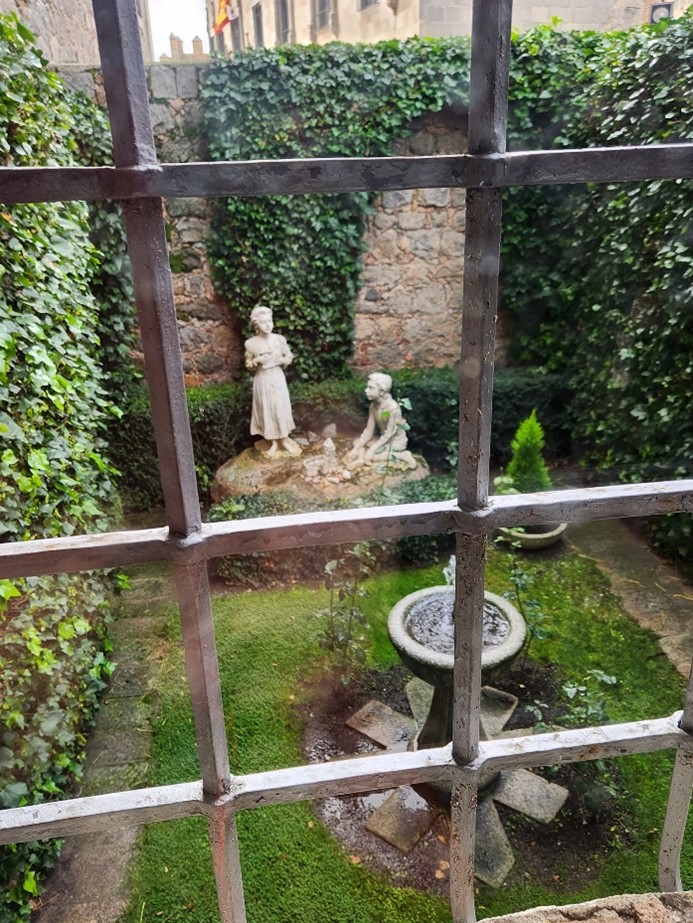
Part of the original garden of the house of Teresa de Avila

Teresa de Cepeda y Ahumada was born in Avila on March 28, 1515. She came to love Jesus so much that nothing else but His presence in prayer and solitude gave her the greatest joy. Though she faced much physical hardship and was frequently ill, she lived in obedience to the Lord and pressed on with the work that God had called her to do. Also known as St. Theresa of Jesus, Christ alone was her safety and security. In the strength of her Savior, she went beyond the walls of Avila and traveled long distances, as she opened her life to love and serve others in radical ways. She didn’t need the walls to protect her and she did not let the walls hinder her from giving all to Christ.

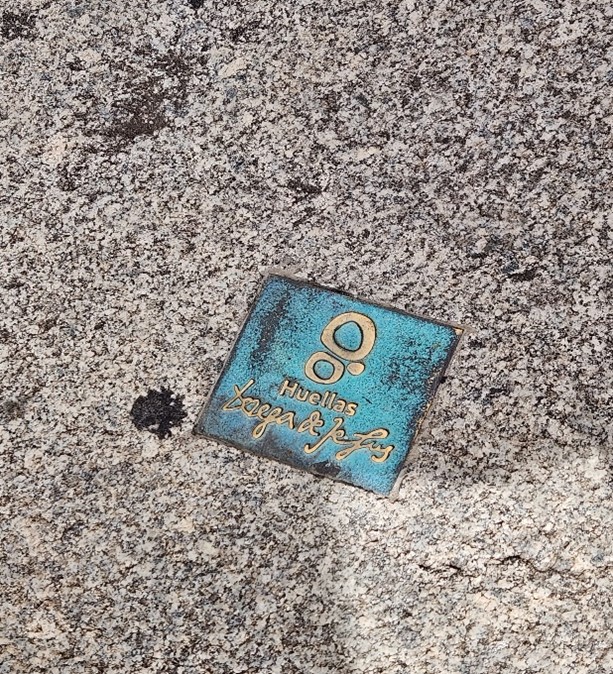
This symbol is found on the roads that were traveled by Saint Theresa.

2 Timothy 1:7 – For God gave us a spirit not of fear but of power and love and self-control.

Structures and systems that are meant for our protection, can turn into our own prison, when we forget that our ultimate security is in Christ alone. Because of Christ, there is no need to put up our own defenses, for He himself is our fortress. His perfect love breaks down the walls built by our sin and self-centeredness. In Him, we have been freed to walk peacefully through trials, to embrace difficult relationships and serve as a conduit of the hope He offers to everyone.

Our lives will always have moments and seasons of pain, illness, hardship, conflict, separation, and sorrow, not because of God’s failure to protect, heal, or provide. These are realities of our lifelong journey through which we get to experience more deeply the steadfast love of Him in whom we live and move and have our being. It is not my intention to minimize the horrors of abuse and other sufferings experienced by so many. It is true that there is a place for lament and grief in the life of every person. It is also true that because God is everything that He says He is, it is possible to be in the middle of real physical harm, or serious emotional turmoil, or deep spiritual battles, and still have the assurance that we are precisely where God wants us to be for such a time as this. The Holy Spirit continues to encourage me that as I grow in intimacy with my Lord and as I surrender to His sanctifying grace each day, every single item in the long list of tragedies that I fear, will gradually weave its way into the list of things that can NEVER separate me from the love of God. (Romans 8:37-39) This is the heart change that I need. This is the work that He has begun and will complete (Phil 1:6)

Psalm 28:7 The Lord is my strength and my shield; in him my heart trusts, and I am helped
my heart exults, and with my song I give thanks to him.

The word of God further reminds me that the only shield I will ever need on this earth is the shield of faith; a gift graciously given by Him who is already victorious through His death and resurrection. Because He is my shield, I can take risks in obedience to Him and for His glory.  Like Joab, I should trust the Lord to do what seems good to Him. (2 Samuel 10:12)

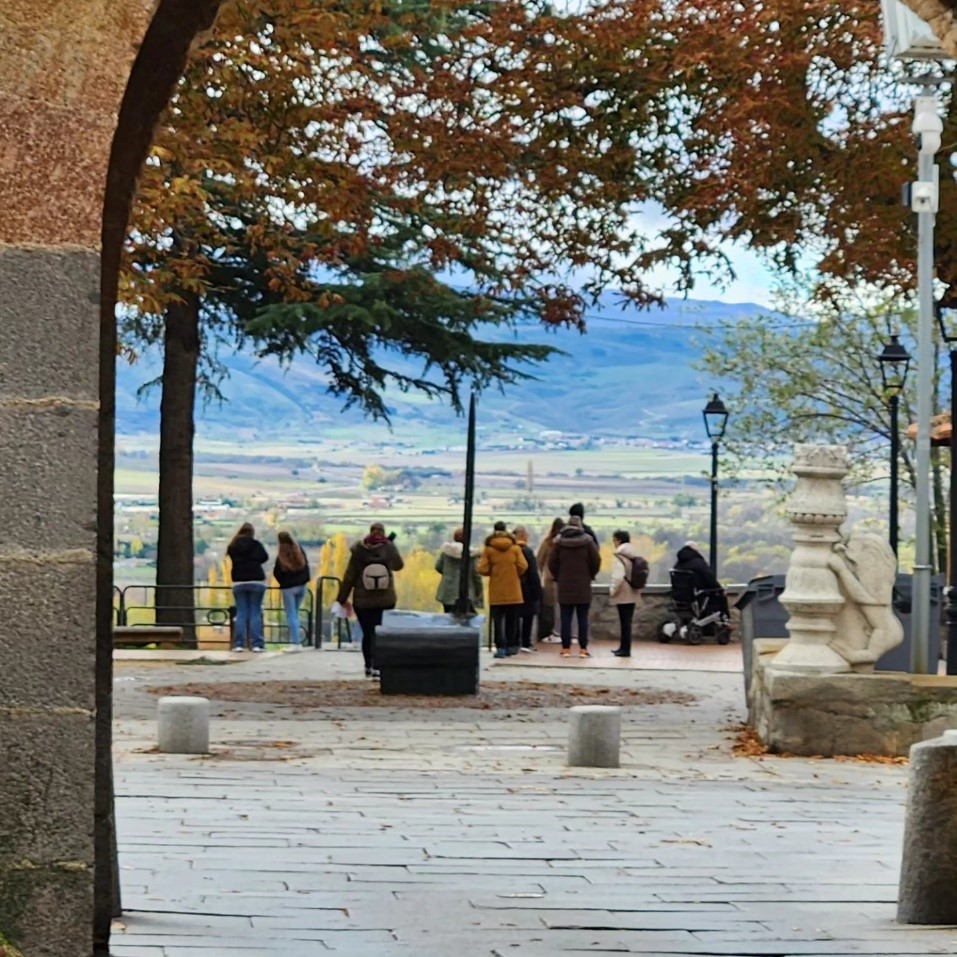
A gateway through the wall

As I stepped outside the walls of Avila through one of its nine gates, I was rewarded with an amazing view of a peaceful valley and picturesque mountains. While the medieval walls were undoubtedly impressive, the sights that lay beyond them were even more breathtaking. Christ has opened the gates of courage and compassion so that we can love others beyond the boundaries of our comfort. We can let go of the man-made fortresses of our hearts and live in faith instead of fear.

Psalm 16: 7-9 I bless the LORD who gives me counsel; in the night also my heart instructs me. I have set the LORD always before me; because he is at my right hand, I shall not be shaken. Therefore my heart is glad and my whole being rejoices; my flesh also dwells secure.

A row of towers along the walls of Avila

Alcoves of Accountability

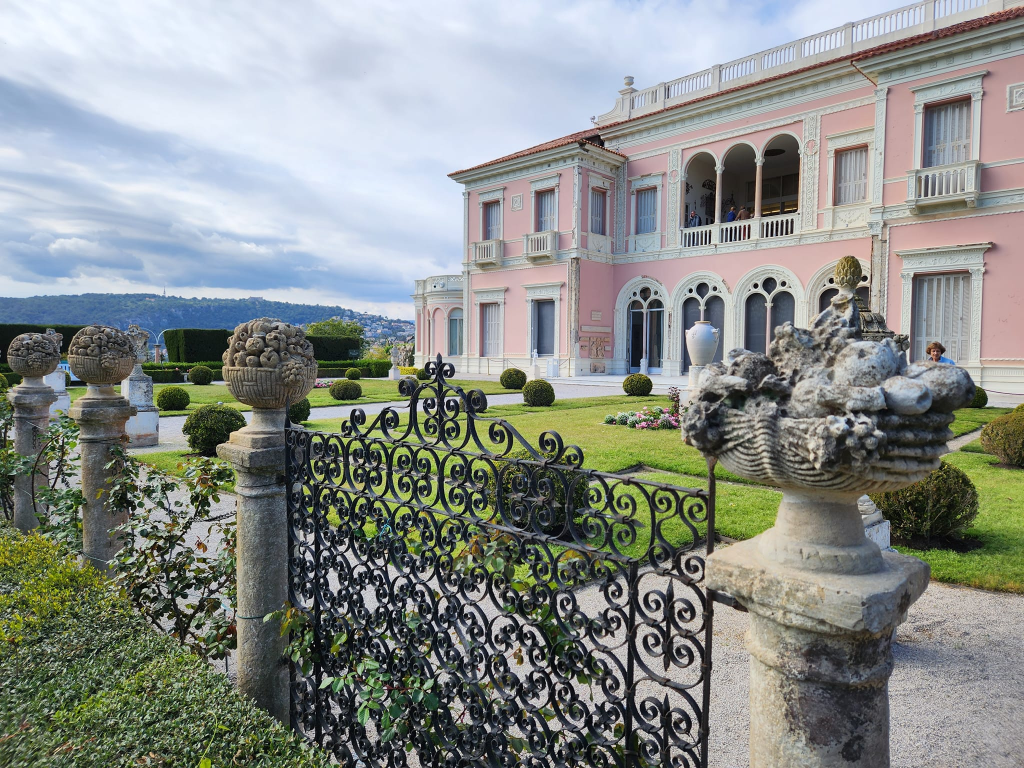
Villa Ephrussi de Rothschild

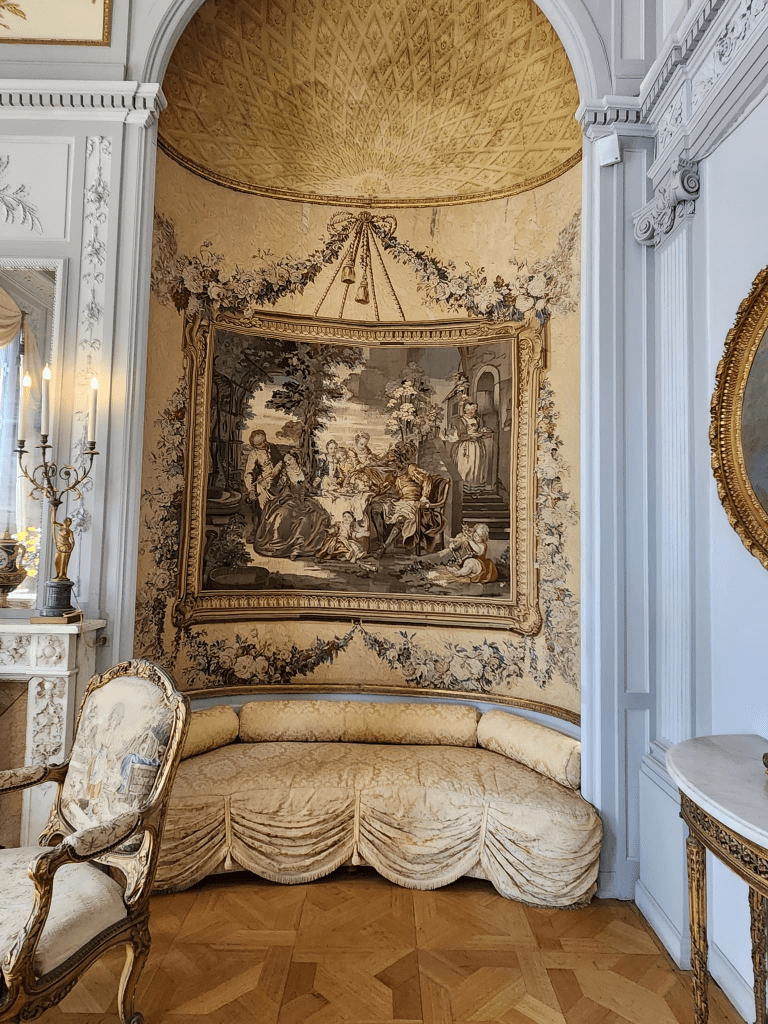
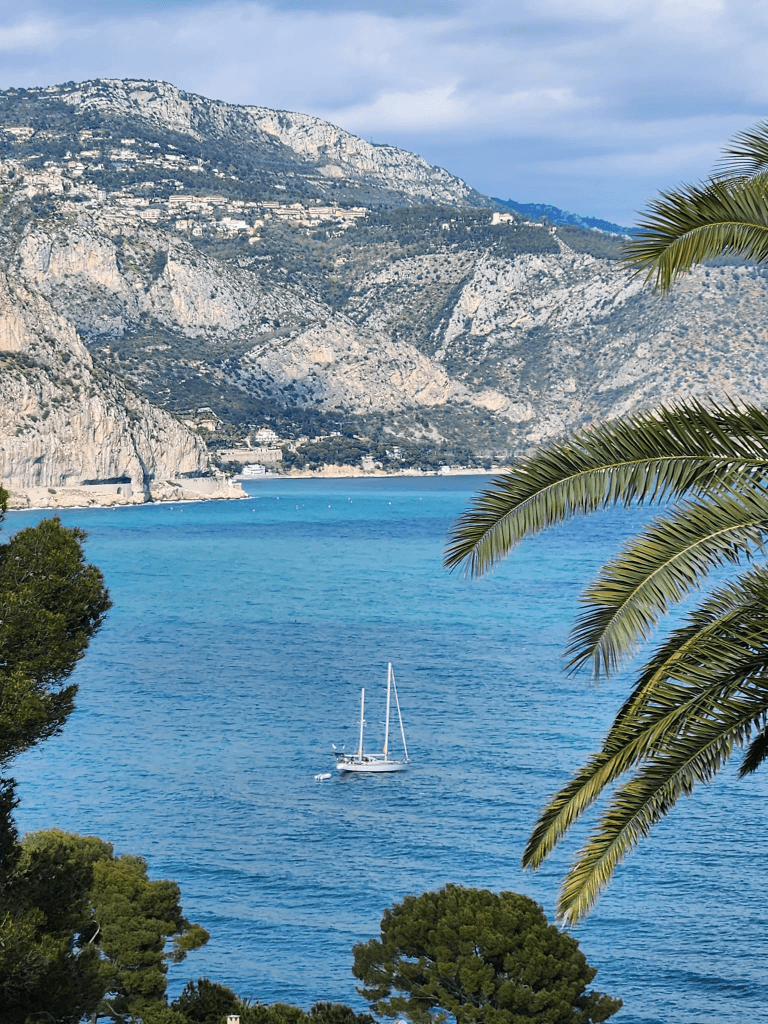
What is an alcove? In architecture, an alcove is a recess or a niche in the wall of a room that could serve as a sitting or storage area. I found two pretty alcoves inside the magnificent Villa Ephrussi de Rothschild, during a day trip to Saint Jean Cap Ferrat along the French Riviera. Villa Ephrussi is a mansion built between 1907-1912 for Baroness Beatrice de Rothschild of the famous Rothschild family of bankers. This gorgeous estate geographically sits on a promontory of an isthmus, allowing breathtaking views of the Mediterranean from both sides of the property. To accurately describe the charm of this rose-colored villa and the grandeur of its nine gardens will require a much higher level of knowledge and expertise in architecture, interior design and landscaping.  So let me just talk about an interesting feature I found inside the house, which the guided tour referred to as “alcoves for post prandial conversations”. These are elegant sitting areas located in two corners of the dining room. The idea is that after sharing a meal with guests at the dining table, these alcoves would serve as separate areas to sit, linger, relax, and converse more privately with just one or two other friends.

Alcove for post prandial conversations

Iron sharpens iron, and one man sharpens another. Prov. 27:17

I’m not interested in remodeling our home to create alcoves for post prandial conversations. But I am very thankful that throughout my life as a follower of Christ, God has generously allowed me to sit in alcoves of accountability with sisters in Christ – fellow sinners saved by grace. In these alcoves, life stories are shared without skipping the chapters on suffering and sin. Trust is built out of intentional vulnerability about our own frailty and our constant need of God’s grace. In these alcoves, prayer abounds, and time is not wasted in superficial conversation. Fellowship bears fruit in the form of a deeper commitment to love and spur each other on for God’s greater glory. Encouragement is genuine because love is not determined by similarities and preferences, and the shared joy of living for Jesus becomes more evident.

Two are better than one, because they have a good reward for their toil. For if they fall, one will lift up his fellow. But woe to him who is alone when he falls and has not another to lift him up! Ecclesiastes 4:9-10

View of the Mediterranean from the east side of the villa

The bible is full of examples of strong, committed relationships among God’s people: David and Jonathan, Ruth and Naomi, Elizabeth and Mary, Paul and Timothy, and many more. Research studies done in pastoral ministry have shown that having a fully disclosing friend is a significant factor in determining whether one’s ministry life will thrive in the long term. But if accountability is so important, why is it so rarely experienced and lived out?

Privacy is one of the most cherished rights in our society. It is important and it has a purpose. However, in terms of our Christian walk, privacy and individualism do not serve as instruments for our sanctification. Unfortunately, it is not in our nature to move towards accountability, even though we value (or we think we value) the concept.  We may talk about it, while remaining highly capable of spiritual isolation. We may actively serve in various ministries and yet barricade ourselves mentally and emotionally such that no one can speak into our lives or influence us in our convictions. We may choose to confine fellowship with brothers and sisters at the huge dinner table of Sunday service, without any purposeful pursuit of much deeper connections with a close friend or a small group in alcoves of accountability.  Individualism may deceive me into thinking that my sins and struggles should just be between me and the Lord; when in fact, the Word of God clearly says, “Therefore, confess your sins to one another and pray for one another, that you may be healed.” James 5:16a

One of nine gardens at Villa Ephrussi

Christian author John Ortberg once wrote that if we long to be loved, we must be willing to be known. Being deeply known sounds risky, yet the protection it provides is much greater than we will ever realize in our lifetime. Temptation becomes a hundred times more irresistible in the alcove of isolation. On the other hand, alcoves of accountability offer a hedge of safety when God’s truth is spoken to one another out of love. Because it is God’s idea, our abiding in accountability relationships will be life-giving and transformative. It doesn’t mean all will be perfect. We will encounter disappointments along the way, for we are all flawed. Not only might we feel uncomfortable in disclosing our anxieties and difficulties to another person; but we may likewise feel inadequate when others unravel their doubts and fears to us. Yet the grace God gives will always be enough for the challenge that is before us. Let us take comfort that He, whose strength is made even more manifest in our weakness, doesn’t expect us to know all the answers. He has given us His Spirit by whose power we can love others genuinely, as Christ loves us.

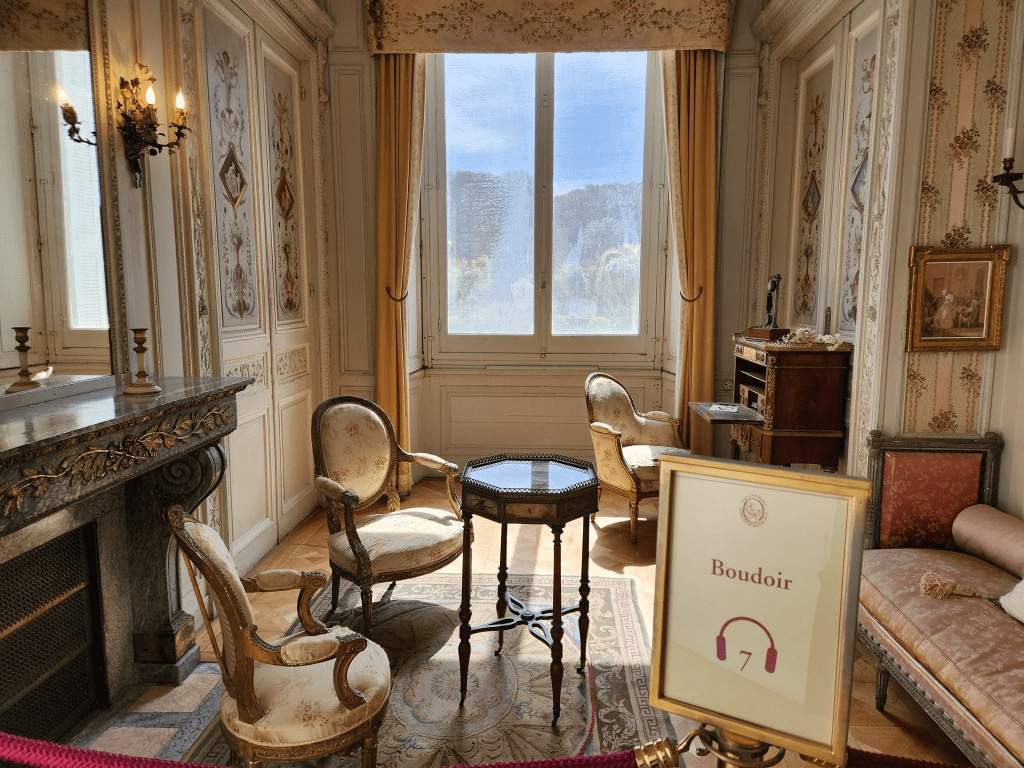
The boudoir of the baroness

Oil and perfume make the heart glad, and the sweetness of a friend comes from his earnest counsel. Prov 27:9

Who is there to sit with you in the alcove of accountability? Dear friend, do not let pride build a wall of self-sufficiency around you, as though you never need the counsel of another. Every child of God is a vessel that is meant to be poured into, and to be poured out. Too many sins have been committed in secret. Too many saints have fallen by going solo; by not having anyone to fully disclose one’s soul, and mutually share the struggles of the heart. We all need, and we all should be, that listening, caring, Truth-telling friend whose compass needle always points to Jesus. He is exalted when we humbly submit to one another.

If we say we have fellowship with him while we walk in darkness, we lie and do not practice the truth. But if we walk in the light, as he is in the light, we have fellowship with one another, and the blood of Jesus his Son cleanses us from all sin. 1 John 1:6-7

View of the Mediterranean from the west side of the estate

If I take offence easily; if I am content to continue in cold unfriendliness, though friendship be possible, then I know nothing of Calvary love.Amy Carmichael

Combien ca coute? Reflections on worth and value, from Saint Paul de Vence

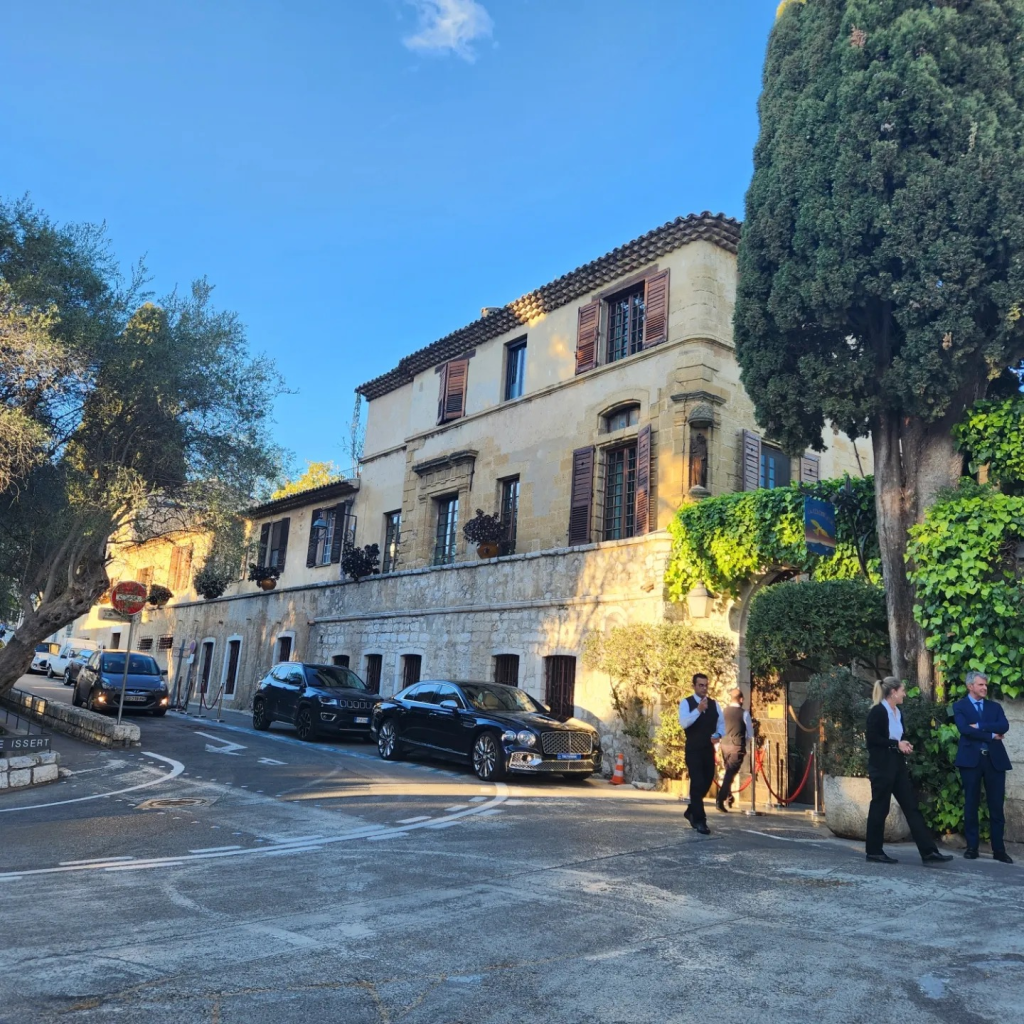
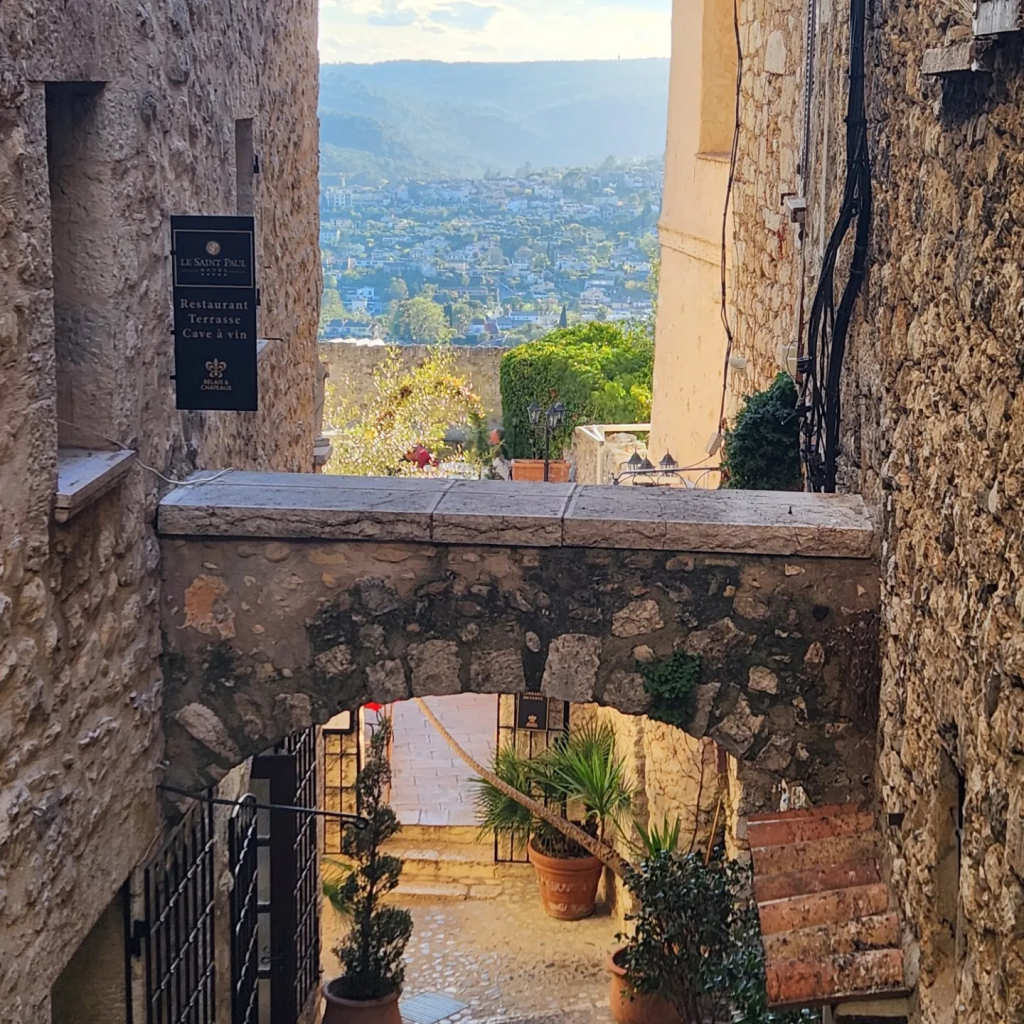
North of Antibes and west of Nice is a hilltop village known as Saint Paul de Vence. It is an absolutely charming place that has been a haven for artists like Matisse, Miro, Picasso and Chagall.

Hilltop cemetery Saint Paul de Vence

In fact, Chagall was buried in a picturesque cemetery located at the very end of the town’s main footpath. It is not hard to imagine how painters could naturally derive creative inspiration from this location in the beautiful Alpes-Maritime area of the region of Provence. Even today, the narrow cobblestone footpaths are lined with boutiques selling various forms of art. One doesn’t mind getting lost in this mesmerizing labyrinth where medieval charm and timeless artistry co-exist.

At the threshold of this village, there is an establishment called La Colombe d’Or (Golden Dove), which opened in the 1920’s, first as a café, then later as a small hotel.

La Colombe d’Or Hotel

In its early days, there were times when guests could not fully pay for their food or lodging. Many of these guests were aspiring painters, and in those instances, the owners would accept a drawing or painting as payment. As the years went by, more than a few of these artists actually became successful. They gained recognition and their works accrued value. Decades later, and with the passing of these famous painters, the walls of La Colombe d’Or evolved into collages of highly priced masterpieces. The once ordinary artworks that those cash-strapped guests gave in exchange for accommodations are now valued more than the hotel itself. If I were to point to a painting in the reception hall and ask the manager “Combien ca coute?” (how much is it), I’m sure the he would say, “It’s not for sale, Madame.” (And he would probably be thinking, “No way, crazy tourist!!!”)

Art Galleries in Saint Paul de Vence

I am not an art connoisseur. In fact, I only know a few important names in the field. I vaguely understand how art is appraised but I’m quite certain it has a lot to do with the artist who created it. Although my eyes may be initially drawn to a painting’s content, composition and other aesthetic details that I find attractive, I realize that it is the signature in that one corner that primarily determines the value of what I’m enjoying.

What is value? Oxford Dictionary defines value as how much something is worth. How much are we willing to pay for something we value? How much are we willing to sacrifice for someone we love? We may not all be appraisers of art but whether we realize it or not, our daily decisions and actions, our joys and struggles in life, are totally influenced by our ongoing assessment of value and worth within us and around us. In a way, we are always asking ourselves, “Combien ca coute?”

For God so loved the world, that he gave his only Son, so that whoever believes in him will not perish but have everlasting life. John 3:16

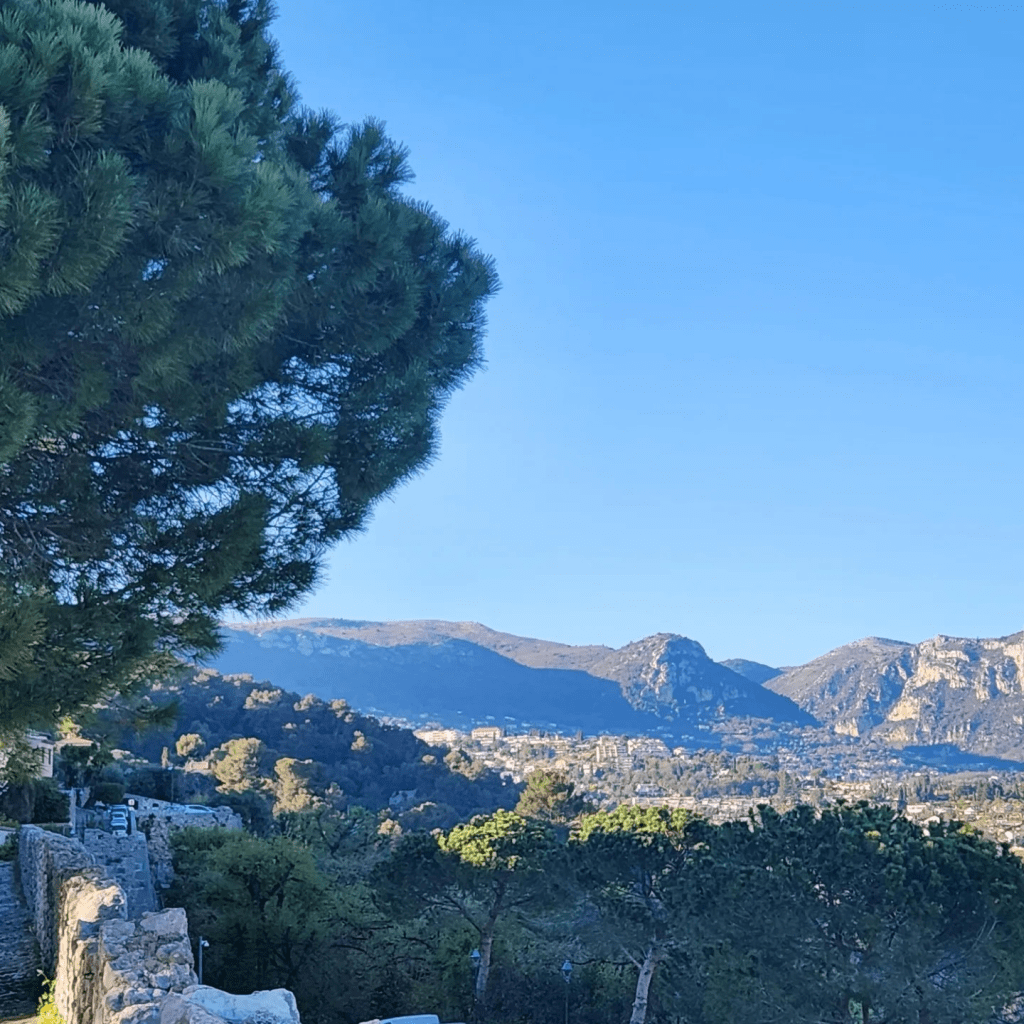
View of Provence, from Saint Paul de Vence

On Calvary, that first Good Friday, Christ showed us how much we are loved and valued. He bore the penalty that should have been ours, and paid the ultimate price for our salvation.

In him we have redemption through his blood, the forgiveness of our trespasses, according to his grace Eph 1:7

If you have been a Christian for a long time, I’d encourage you to ask the Holy Spirit to not allow this precious truth to become too familiar, like a painting you’ve seen so many times such that you’ve lost interest in it. Open the pages of God’s Word and pray. Come closer to the Master and see His signature in this loving work of redemption. Do not let this be just another holiday. Seek solitude, reflect and linger, as there is so much more to be amazed at. Though Christ’s work on the cross is finished, the Author and Perfector of our faith is very much still at work. Let us ascribe greatness to Him, whose work is perfect, whose ways are just (Deut 32:3-4). The hands that created us, the hands that were crucified for us, the hands that are now molding us into the image of Christ, can and will hold us securely forever in awe of Him. Let us remain in the shadow of the Cross where grace is inexhaustible. There are always deeper alcoves of intimacy to which He invites us.

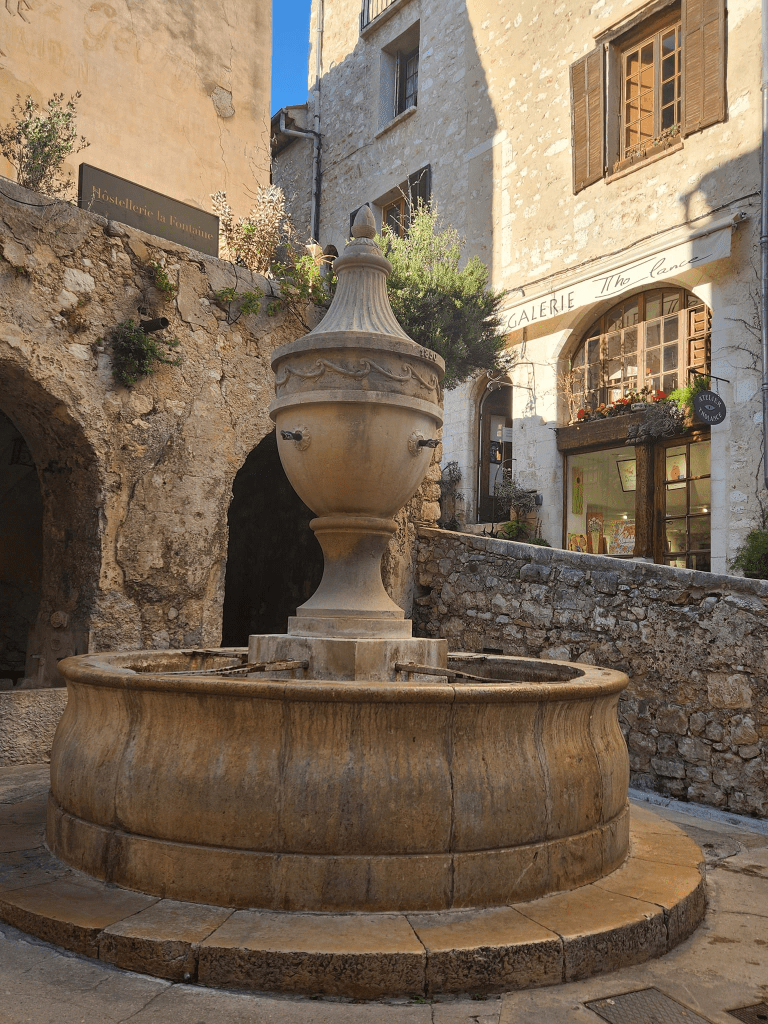
Stone fountain that marks the old market square, Saint Paul de Vence

If you have never given your life to Jesus, please do not hesitate any longer. The timing could not be better as His people, flawed as we are, prepare to celebrate the One event that makes all the difference both in this life and beyond.  Jesus’ death and resurrection has everything to do with God’s immeasurable love for you and for the world. Turn the eyes of your heart to Jesus. No matter what your past has been, it is in Him and only in Him that every human being finds eternal value. He invites you to taste and see for yourself how through His love and grace, our lives of worthless scribbles and sketches find meaning and purpose. He creates in us a new heart and He signs His name by giving us His Holy Spirit as a stamp of ownership. It is His own declaration that we belong to Him and therefore we are valued; not because of what we’ve done, not because of any inherent beauty or righteousness in us, not because of anything we have, but simply because of who He is. It is His signature that matters.

I have been walking with Jesus for many years, and even though I fail many times, His grace never does. I am not perfect at all but I am also not the same person that I was years ago, because He is faithful and wise in using whatever is best to refine my heart and character. And when anything or anyone (including the devil) tries to rob me of my identity, or purchase my greatest affection and asks “Combien ca coute?”  My Lord and Savior himself will reply, “No way! She is mine.”

I have been crucified with Christ. It is no longer I who live, but Christ who lives in me. And the life I now live in the flesh I live by faith in the Son of God, who loved me and gave himself for me. Gal 2:20

View of the mountains (pre-Alps) from Saint Paul de Vence

And can it be that I should gain
An interest in the Savior’s blood?
Died He for me, who caused His pain?
For me, who Him to death pursued?
Amazing love, how can it be
That Thou, my God, shouldst die for me?

No condemnation now I dread
Jesus, and all in Him, is mine!
Alive in Him, my living Head
And clothed in righteousness divine
Bold I approach the eternal throne
And claim the crown, through Christ my own

Amazing love, how can it be, that Thou, my God, shouldst die for me?

By Charles Wesley (1738)

A moment in Montmarte

“For freedom Christ has set us free; stand firm therefore, and do not submit again to a yoke of slavery.”

Gal 5:1
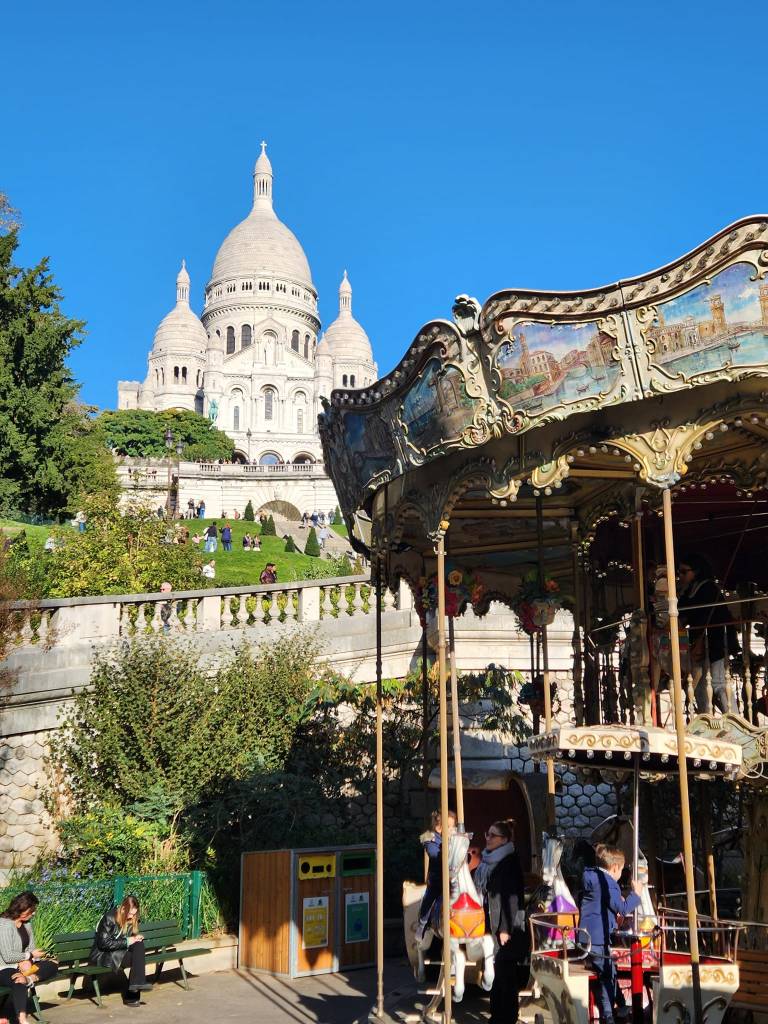
The Carousel at Sacre-Coeur

Montmarte is an artsy and colorful district in Paris that was once home to painters such as Renoir, Picasso and Van Gogh. This place remains a favorite of locals and tourists for what it offers as far as street cafes, shops and sights. It was a beautiful morning when my friend and I rode the funicular going up the butte with Sacre Coeur Basilica at its pinnacle. This is the place to savor and photograph some of the best panoramic views of Paris. After a series of selfies, we climbed down the 270 steps, pausing at times to take in the lovely scenery a little bit more. As soon as we reached street level, our shopping expedition officially began.

Aside from well-known boutique brands that can be found elsewhere in Paris and Europe, Montmarte is home to local small businesses that sell unique items. We were there on a Sunday, so in addition to the usual stores and establishments, the Marche aux Puces was in full swing. Although I’m not a flea market expert, I still found it amusing to simply look around.

Marche aux Puces
Whimsical Kitchen Tools and Gadgets

After scoring a bargain at Fragonard Parfumeur and purchasing some clothing items, we happily concluded our productive Montmarte morning. We decided to take the Metro back to our hotel to drop off our “souvenirs” before heading out for lunch. At this point I was carrying a big brown shopping bag on my shoulder. After inserting my ticket at the station, and physically pushing the turnstile to get to other side, my shopping bag got stuck behind me against one of the horizontal bars. Now we all know that the purpose of a turnstile is to ensure a unidirectional flow of people. In other words, a fully functioning turnstile (like this was) could not rotate backwards in the opposite direction. It was practically immobile with my shopping bag wedged in.

The situation became even more horrific when I realized that building up behind me was a line of people who didn’t look particularly excited about getting delayed or having to switch to the other queue. (There were only two turnstiles on that particular platform and thank God the other one didn’t have an American tourist stuck in it.) I essentially caused a 50% obstruction in the flow of pedestrian traffic in a popular subway stop, on a pretty busy Sunday. I’m certain that the total duration of my entrapment was not even a minute, but it felt like five long embarrassing minutes to me. My quick-thinking friend inserted another ticket, enabling the turnstile to rotate again in the forward direction, which then set me and my bag free and unharmed.

View of Paris from Sacre Coeur Basilica

I blog about being temporarily trapped in a turnstile not just because I find it hilarious (in retrospect); but perhaps that one brief moment could serve as a tiny metaphor for many of the bigger struggles we find ourselves in. The lesson for me has nothing to do with shopping in and of itself, but it has everything to do with the condition of my heart and choices that I make.

“Keep your heart with all vigilance; for from it flow the springs of life.”

Prov 4:23

First of all, I was amazed by how easy it was to get stuck. Sometimes we have no idea how vulnerable we are. I view this as a gentle reminder to never presume that “I have arrived” in character, faith or spiritual maturity. The truth is I can always be ensnared by sin with one squeaky turn of my self-centered will. Secondly, the root cause of my physical entrapment was a load that I placed upon myself. I was not a victim of other people’s choices. I picked each and every item that filled the bag I was carrying. These reflections prompted a series of questions:

  • What objects of affection have I yet to surrender to the sovereign will of Him who first loved me?
  • What is my heart attached to that hinders me from knowing His grace in every aspect of my life?
  • What do I need to be emptied of in order to live in the fullness of His joy?

Whatever must go, whatever must be abandoned to have Jesus – he’s worth it. He’s worth it now, and he will be worth it into eternity.

God Does His Best Work With Empty, by Nancy Guthrie

The synoptic gospels tell the story of a rich young man who came to Jesus, with a desire to know how he could earn salvation. “Teacher, what good deed must I do to have eternal life?” was his question (Matt 19:16). Based on his self-evaluation, this human being believed that he had already obeyed ALL the commandments of God. He thought he could secure his place in eternity by doing more. He was not at all prepared to hear that what Jesus wanted was for him to give up ALL.

At this, the man’s face fell, and he went away sad, for he had many possessions.

Mark 10:22
Sacre Coeur Basilica

Jesus knew that this man’s heart was enslaved by his love of wealth. The problem is not the wealth, but his worship of it. Out of compassion, Jesus shed light into his blind spots by asking him to let go of ALL earthly possessions. Our Lord was not being harsh. He was being kind in that he longed for this person to realize that his heart, which he thought was in full obedience to God, was actually in awe of something other than God. This means that contrary to his self-assessment, he really hasn’t loved the Lord with ALL his heart, soul and mind.

As we begin this new year, perhaps our prayers ought to focus on asking the Holy Spirit to reveal to us what we need to be emptied of. Let us pray for the grace to let go and lay everything at His feet, so that our hearts can delight in fullness of joy in Christ alone.

You make known to me the path of life; in your presence there is fullness of joy; at your right hand are pleasures forevermore.

Psalm 16:11

God calls us to remember: a prayerful pause at the Cotswolds

Psalm 105:4-5

Seek the Lord and his strength;
    seek his presence continually!
 Remember the wondrous works that he has done,
    his miracles, and the judgments he uttered.

ESV
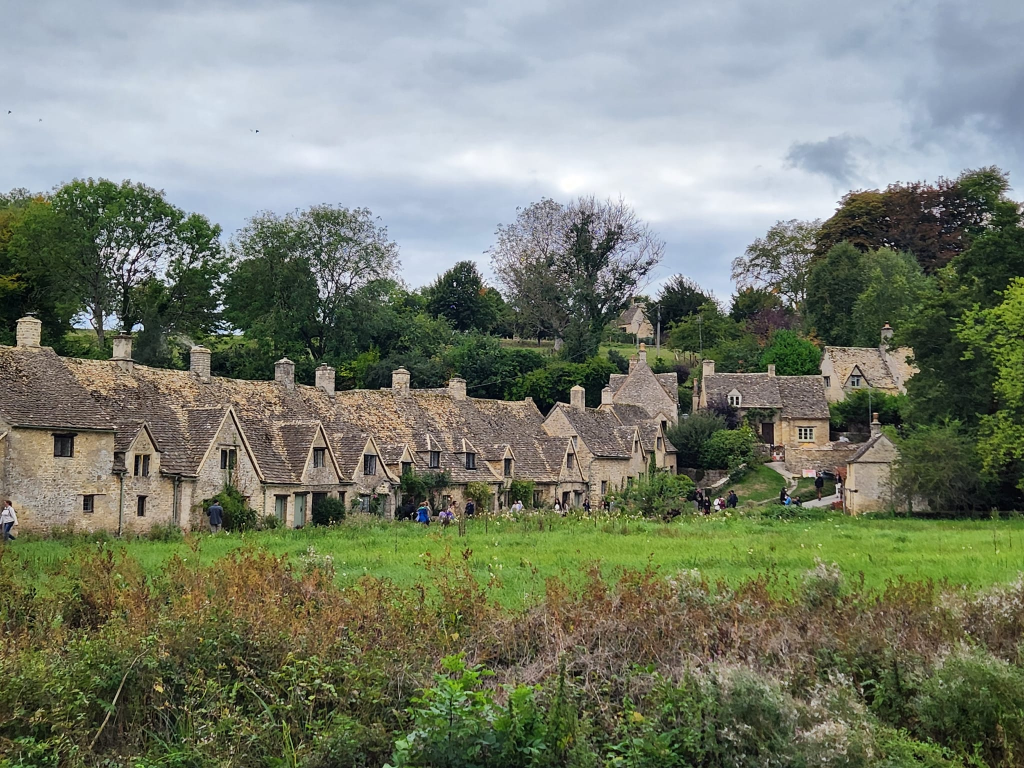
Arlington Row in Bibury, The Cotswolds, UK

In the middle of England lies this treasure known as the Cotswolds – pretty little villages that once flourished because of the wool industry. These towns span a huge land area that has been officially recognized for its extraordinary beauty, otherwise known as AONB (Area of Outstanding Natural Beauty). A trip to the Cotswolds is an opportunity to see some of the loveliest sceneries that England is known for. As a matter of fact, an image of the Cotswolds, specifically that of a row of cottages in Bibury, Gloucestershire, is featured on the inside front cover of every British passport.

We hopped on a tour of the Cotswolds in the afternoon of Queen Elizabeth II’s funeral. It was a very quiet day without the huge volume of sightseers from all over the world that this major tourist attraction usually receives. In a span of six hours, we saw for ourselves why countless others have fallen in love with this piece of England. Aside from the unparalleled charm, which Steven Spielberg himself realized upon selecting the town of Castle Combe for the movie War Horse, to me there was, likewise, a kind of aura or a peaceful nostalgia that makes these villages special. It felt as though someone pressed the PAUSE button at some point in their history. There are no new developments, no modern amenities that would ruin the ambiance created by the limestone cottages, thatched roofs, old bridges, and running brooks. The surroundings simply invite one to walk (or sit) and relish the beauty of the past.

Castle Combe, The Cotswolds, UK

But why recall the past when nothing can be done about it? Isn’t the present all that matters? Author Corrie Ten Boom survived a Nazi concentration camp. In today’s language, one could say that war interrupted her normal. She became acquainted with lots of suffering, pain and loss, and yet because of her faith in God, this is what she had to say about the past.

“This is what the past is for! Every experience God gives us, every person He puts in our lives is the perfect preparation for the future that only He can see.”
― Corrie Ten Boom, The Hiding Place

In the bible, there were many times when God commanded His people to remember what He has done. Prayers of psalmists are filled with words recalling both the mercies and judgments of God. Bringing to mind who God is and how He manifested his love and sovereignty in the past is meant to be a source of strength to those who serve Him. It would be pointless, though, to draw encouragement from the past if God is not absolutely faithful and true. If there is the slightest chance that He might have a weakness or that His love for us may change, how is remembering helpful? But because the God that we worship is steadfast and unchanging, we can and should derive comfort and courage in looking back and pondering all that He has done, lest we forget how amazingly good He has been. He who has loved the world from the very beginning, continues to do so.

Psalm 25:10

All the paths of the Lord are steadfast love and faithfulness,
    for those who keep his covenant and his testimonies.

ESV
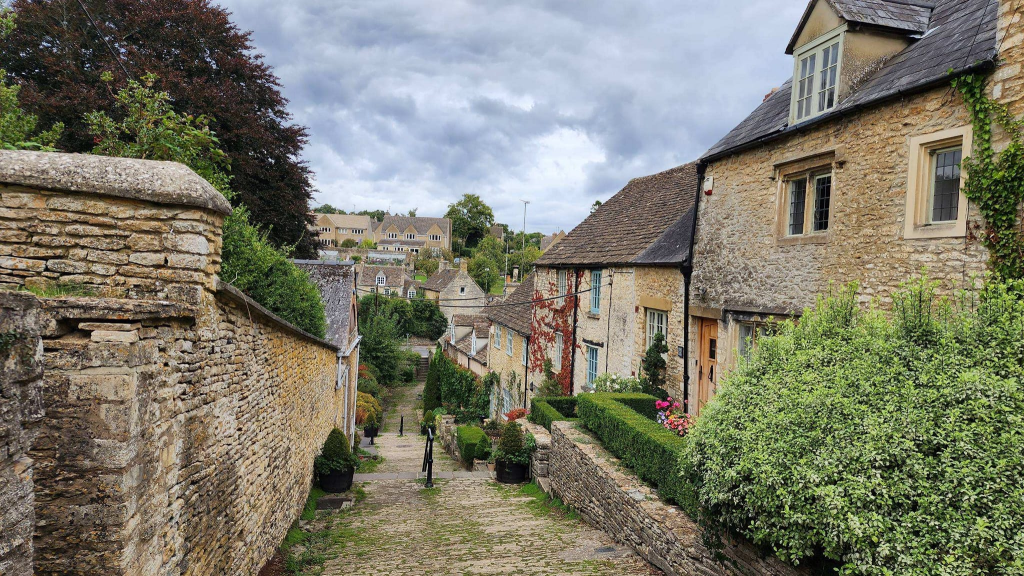
The Chipping Steps in Tetbury, The Cotswolds, UK

In the old days in Tetbury, to reach the market, people climbed up the chipping steps carrying sacks of flour and other goods to be sold. As I was climbing up those same steps, I kept looking back and taking photos of the picturesque view behind me. It was not at all because I disliked the view in front of me. (Remember, this is the Cotswolds. Picturesque is everywhere). But it gladdened my heart to see that each step that I took forward, lengthened the path behind me and broadened the perspective that my little camera phone could capture. And I was grateful for that, just as I am thankful for all that He allows the eyes of my heart to see when I look back at the seasons of life through which He has taken me.

So what has the Lord reminded you of lately? What is it that you need to ponder? What holy remembrance has His Spirit renewed in your heart?

Press the PAUSE button, and let the memories lead you to a place of prayer.

Psalm 77:11-12

I will remember the deeds of the Lord;
    yes, I will remember your wonders of old.
 I will ponder all your work,
    and meditate on your mighty deeds.

ESV

Roman ruins and reflections on fear, pride, and humility

Parade Gardens, Bath UK

“What has been is what will be, and what has been done is what  will be done,

and there is nothing new under the sun. Is there a thing of which it is said, “See, this is new”?

It has been already in the ages before us.”

Ecclesiastes 1:9-10 ESV
Holburne Museum, featured in the Netflix series Bridgerton

My husband and I ventured outside of the US for the first time since the COVID lockdown. The idyllic English countryside was our goal and Bath, in Somerset, was our home base. It was my second time to delight in this wonderful city surrounded by seven hills (just like Rome and Lisbon) and blessed with natural thermal springs. A 90 minute train ride westward from London’s Paddington Station transported us to this picturesque place, from which Jane Austen derived inspiration to write a couple of her books. Authors, artists, influencers and movie producers have all found something in Bath that is worth their time and investment.

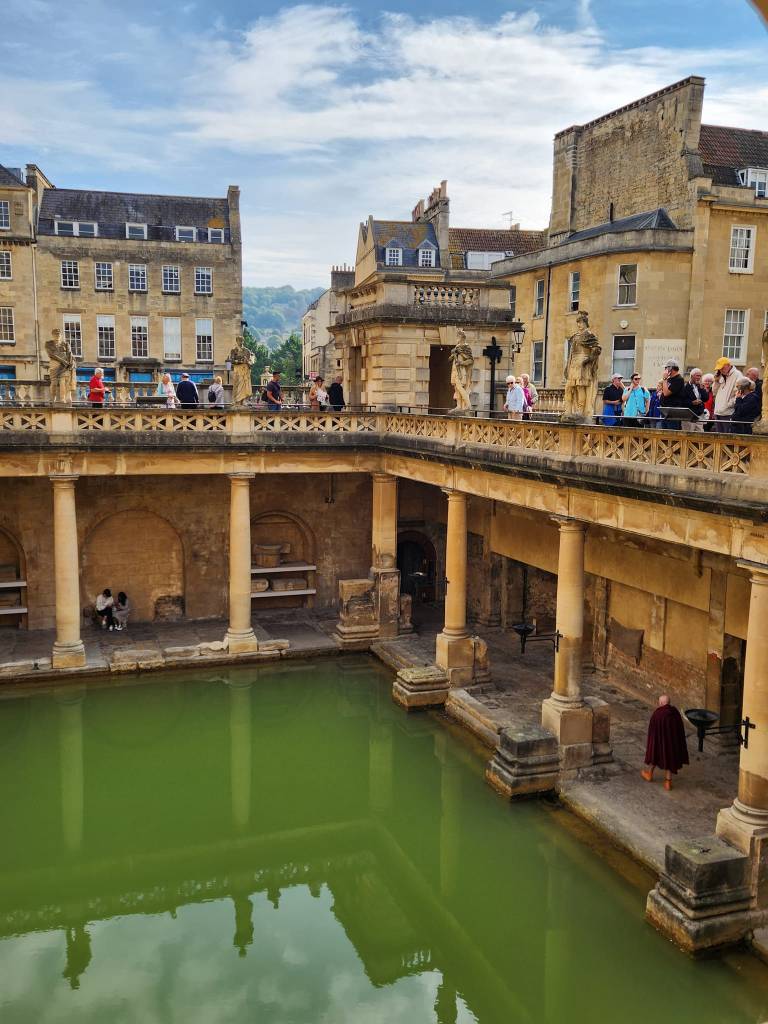
No doubt the most famous attraction here would be the Roman Baths where one discovers layers of history that have been unearthed through careful and costly excavation, preservation, research and restoration. Natural thermal springs in this area have been in use since Celtic times. Then around 300-400 AD, the Romans established an impressive and sophisticated complex to house and host a thriving community. It’s a conglomeration of a health and wellness spa, a religious center, a marketplace, among other facilities. This was Aquae Sulis; and this was the place to be in 4th century AD!

The Roman Baths

Winding through the tunnels of exhibits, visitors find their way into a little cavern of coffins and gravestones. Surely it was not all grand and glorious in Aquae Sulis. Like with any segment of history, people dealt with pain and loss, illness and death. (Interestingly, the soldiers already had a system for securing their funeral plans.) Looking more deeply into what went on in those days and who was revered, it becomes obvious that darkness prevailed as well.

Part of the temple facade. People worshiped the sun god sulis minerva among other gods

Nowadays, Christians express a huge amount of fear about the world becoming so bad. Parents are anxiously wondering how their children could live out their faith in a society growing more and more hostile against Christianity. Grandparents shake their heads in disbelief of current realities and sadly long for how things were, when the world seemed kinder and safer. It is not my intention to validate or refute these feelings. My goal is to simply draw attention to the fact that our God who is the Alpha and Omega, the Author and Perfector of our faith, in Whom we live and move and have our being has always been and will always be on His throne and He remains in charge.

“The God who made the world and everything in it, being Lord of heaven and earth, does not live in temples made by man, nor is he served by human hands, as though he needed anything, since he himself gives to all mankind life and breath and everything. And he made from one man every nation of mankind to live on all the face of the earth, having determined allotted periods and the boundaries of their dwelling place, that they should seek God, and perhaps feel their way toward him and find him. Yet he is actually not far from each one of us,”

Acts 17:24-27 ESV

Let’s not miss what the Apostle Paul was saying here about God’s power to determine the time and place of our existence, so that we would seek Him and find Him near. The bible tells us that rebellion is as old as Adam. Human arrogance – our natural tendency to think of ourselves more highly than we ought (or wiser than God), is ancient. It is not anything new. Although we are shocked with disturbing news about our culture and society every minute, God isn’t.

His saving grace, through the finished work of Christ remains the unfailing hope of all generations. The power that raised Jesus from the dead is not a bit diminished by the passing of time. Our King has complete knowledge of the glory and demise of civilizations, the growth and downfall of institutions, and He alone acts in perfect wisdom for what is best for His own Bride, the Church, at every point in time.

We saw a parade to culminate the Jane Austen festival!

As we were walking around the city, my husband said, “You should write a book here, just like Jane Austen. The title should be Humility and Inclusivity” (as opposed to Pride and Prejudice, which she did not write while living in Bath, but the 2005 movie was partially filmed in Bath). I knew he was kidding but it made me think of how often as believers, our reflex reaction to the changing world around us is tainted with pride and has so little of the humility of Christ, whom we profess to follow. Fear becomes our fortress and we (perhaps subconsciously) start building a cultural “moat” to keep out all who are not like us, and to keep ourselves safe within walls that we presume to call faith. But our true fortress is Christ Jesus, who so loved the world and whose arms are wide open to all who would come to Him. We so easily forget that our Shepherd will surely protect us while we step out in faith and love one another radically. There is no safer place than being in the will of God, no matter how uncomfortable or perilous that calling could be.

So let us be encouraged that we are called to faithfulness right where we are today. He will equip us. He will sanctify us till our hearts delight in Him alone. Suffering is certain and it serves as His merciful reminder that this is not our home.

“Nevertheless, I am continually with you;
    you hold my right hand.
 You guide me with your counsel,
    and afterward you will receive me to glory.”

Psalm 73, 23-24 ESV

Who is this?

Matthew 21:10 And when he entered Jerusalem, the whole city was stirred up, saying, “Who is this?”

It is Palm Sunday today, a day that Christians all over the world remember Jesus, riding on a donkey, entering the gates of Jerusalem, where he was welcomed by multitudes waving palm branches, and shouting “Hosanna”. It was no doubt a glorious moment although short-lived as it was followed rather quickly by his suffering and crucifixion. Nonetheless, at this point he was celebrated by the people as a miracle worker, teacher, even a prophet. (“This is the prophet Jesus, from Nazareth of Galilee.” Matt 21:11) But the greatest truth about who Jesus is was yet to be revealed in the days to come.

Who do you say that I am?

The people who followed him during his life on earth were likewise challenged with this question. Just a few chapters earlier in the gospel of Matthew, Jesus himself asked his disciples: “Who do people say that the Son of Man is?” And they said, “Some say John the Baptist, others say Elijah, and others Jeremiah or one of the prophets.” He said to them, “But who do you say that I am?” Simon Peter replied, “You are the Christ, the Son of the living God.” Matt 16:13-16 Wow! Peter gave such a bold and accurate declaration of his Rabbi’s identity, even though he probably did not completely understand what that meant and how Jesus would eventually demonstrate the fullness of his identity, through his death and resurrection.

Who is Jesus?

The question is as relevant today as it was then. In a world plagued with wars, viruses, rising oil prices, financial hardship, natural calamities, political divide and multiple levels of human conflict, one’s personal response to this question still has the greatest impact in both life and death. This week is a good time to reflect on (or wrestle with) this as we commemorate the most significant events in human history – Christ’s passion, death and resurrection. I am certain that many of us are carrying heavy hearts these days. But even as we are drowning in the enormity of our human suffering, our response to the question of who Jesus is ultimately defines who we are and determines the direction of our lives.

Who is Jesus is not just a question that an unbeliever must make up his mind about someday. It demands a reply even from those of us who claim to know him. It is possible that our lenses of faith have been blurred with doubt, apathy and indifference. We need God’s word to wipe them clear so that we can see Jesus again for the holy, righteous and faithful king that he really is, instead of the harmless idea that we have fashioned him to be. As the human heart is prone to wander, we should pray for the Holy Spirit to redirect our love and our passions back to him who purchased us with nothing less than his own blood. Wherever we are in our journey, the truth of who Jesus is will be worthy of our deepest repentance and highest praise.

The apostle Paul was very much aware of such joy in knowing Christ that he said: “Indeed I count everything as loss because of the surpassing worth of knowing Christ Jesus my Lord.” Phil 3:8 And this is how he beautifully described Jesus in his letter to the Colossians. He is the image of the invisible God, the firstborn of all creation. For by him all things were created, in heaven and on earth, visible and invisible, whether thrones or dominions or rulers or authorities—all things were created through him and for him.  And he is before all things, and in him all things hold together.  And he is the head of the body, the church. He is the beginning, the firstborn from the dead, that in everything he might be preeminent.  For in him all the fullness of God was pleased to dwell,  and through him to reconcile to himself all things, whether on earth or in heaven, making peace by the blood of his cross. Colossians 1:15-20

What the apostle Paul penned in a paragraph might take me a lifetime to fully comprehend. But I believe there is absolutely no better way to spend an entire lifetime than in pursuit of Him who died and gave His life for me. One day there will be a gathering of those who know Christ and are known by him, clothed in white robes and waving palm branches in heavenly worship of the Lamb who was slain. There will be no question about who he is for every knee will bow and every tongue confess that Jesus Christ is Lord.

After this I looked, and behold, a great multitude that no one could number, from every nation, from all tribes and peoples and languages, standing before the throne and before the Lamb, clothed in white robes, with palm branches in their hands, and crying out with a loud voice, “Salvation belongs to our God who sits on the throne, and to the Lamb!” Revelation 7:9-10