

Miradouro – in Portuguese, this refers to a place that offers a panoramic view, like a tower, balcony or a neighborhood park that sits higher than its surrounding areas. Lisbon, the capital of Portugal, is surrounded by seven hills, offering multiple lookout points or miradouros from which to capture some Instagram-worthy photographs.
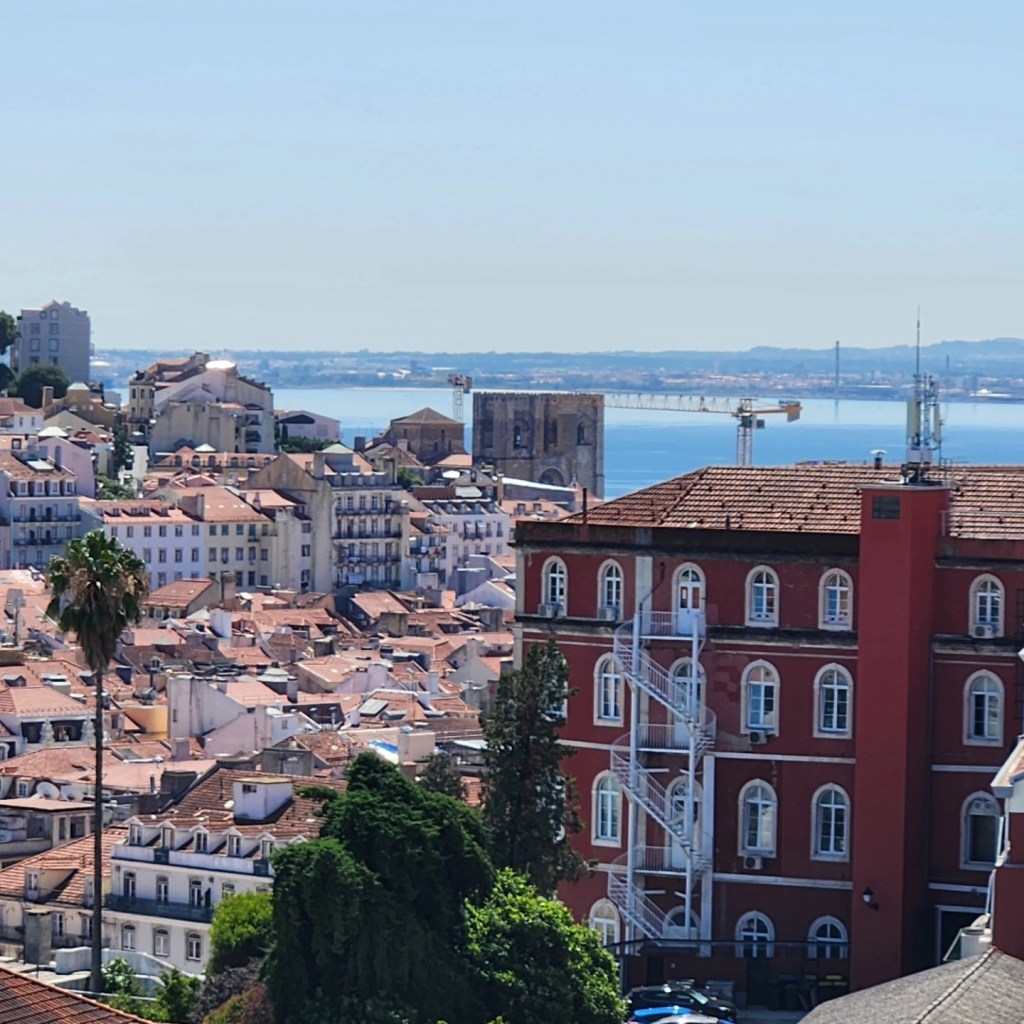
Portugal is a beautiful country that is truly worth visiting and revisiting. I was grateful to set foot in Lisbon for the third time last summer, accompanied by a dear friend for a relaxing girls’ getaway. The very first thing we did was hop on a funicular that took us to Miradouro de Sao Pedro de Alcantara. Our eyes were treated to fantastic views of old town with Castel Sao Jorge on the hill that is almost diametrically opposite where we were standing. From this miradouro, one quickly appreciates the blue waters of the Tejo River that empties into the Atlantic, and a sliver of the harbor that launched numerous historic expeditions. The cathedral is also visible though its two towers seem diminutive from this vantage point.
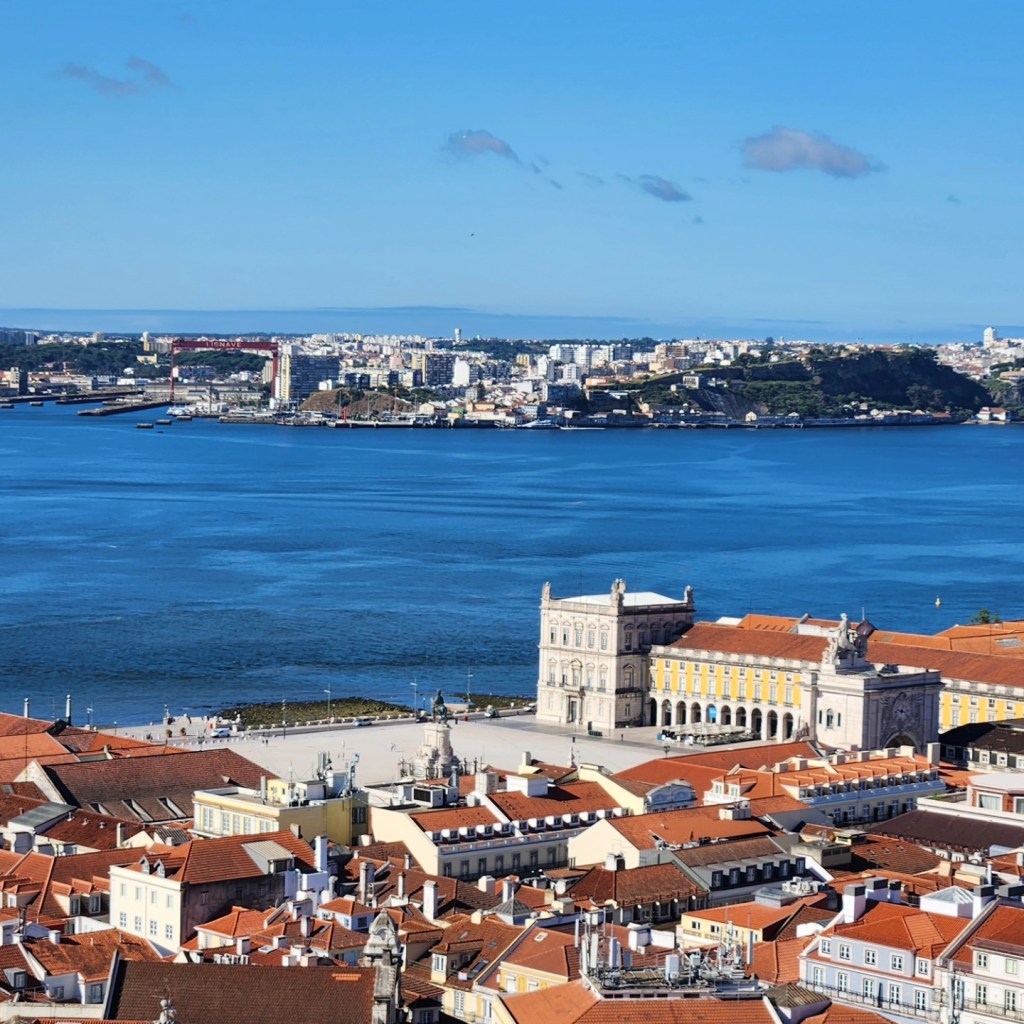
The following day, we found ourselves on the miradouro of Castel Sao Jorge, once more looking over the city of Lisbon and its harbor. Since we were now located in the Alfama district, the harbor appeared (and was indeed) much closer, and we could clearly admire Praca do Comercio where the royal palace once stood, prior to its destruction during the massive earthquake of 1770. This is a huge square, probably the biggest one in Lisbon, though it was obscured from our view when we were at the other miradouro. It is obvious that the things I see and appreciate are largely influenced by my vantage point.
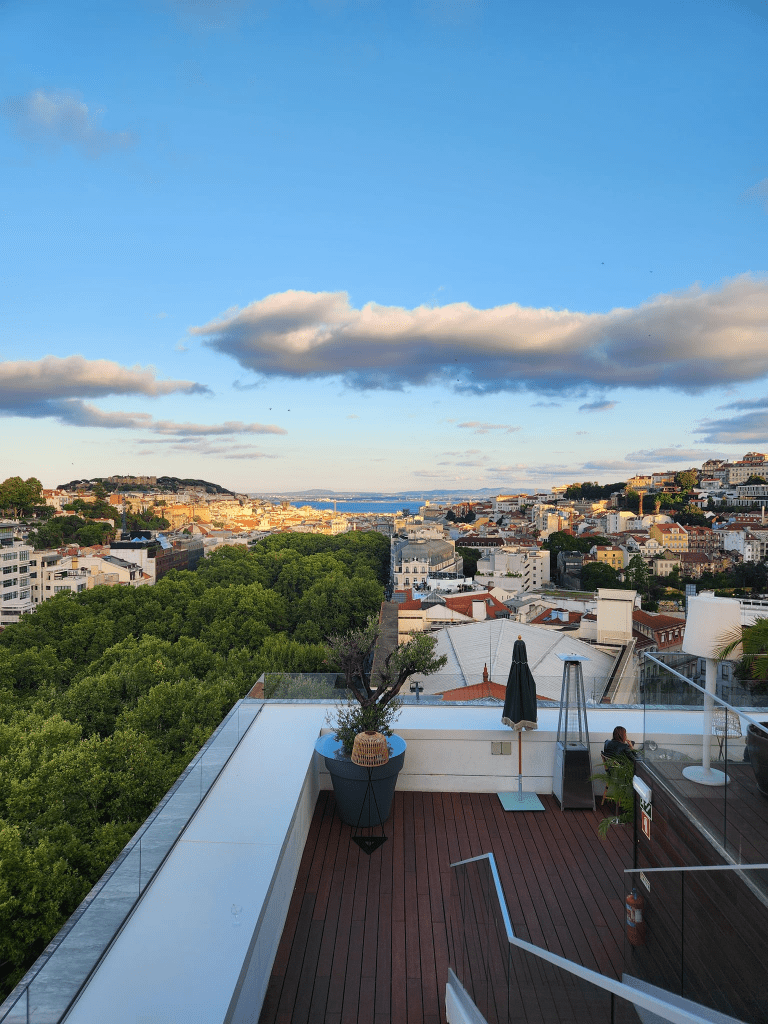
I tend to forget this. Up on my personal hill of knowledge and experience, I am tempted to think that I have the capacity to see the full (and biblical!) picture regarding a situation, conflict, or issue. My reflex is to consider my narrative as THE narrative; my view as THE view. But how do I love my neighbor who might be seeing things from another miradouro? Should I not at the very least listen with respect, and preferably not from a distance? I believe that love means caring enough to descend from the height of my thoughts, ideas, and opinions, walk over to where my neighbors are and view the city from their miradouro to better understand why they see things the way they do. While it is very likely that we will still see some things differently, I am certain that the love expressed in the process of building bridges glorifies God.
John 13:34-35
34 A new commandment I give to you, that you love one another: just as I have loved you, you also are to love one another. 35 By this all people will know that you are my disciples, if you have love for one another.”

The miradouros of Lisbon remind me that in this world, we will misunderstand others and we will be misunderstood. There is such a longing in every human heart not only to be seen but also to be understood. There was a point in my life that I was deeply bothered because I felt so misunderstood by people who are significant to me. But then I recalled how Jesus showed meekness and patience though he was terribly misunderstood, not only by the Pharisees but even by his own followers and family. The Lord lovingly showed me that it was my arrogant desire to be correct (and for others to see that I am right), that fuels my need to be understood. By his grace, the Holy Spirit enabled me to shift my gaze away from self-pity and moved me towards repentance. I asked the Lord to forgive me for the many times that I have misunderstood others – family, brothers and sisters in the faith, friends, co-workers.
Philippians 2:3
3 Do nothing from selfish ambition or conceit, but in humility count others more significant than yourselves.
This perspective has also influenced the way I pray and intercede. While I come before the Father with absolute confidence about my position as a child of His through the finished work of Christ on the cross, and though He has given me freedom to lament in His presence, I now surrender to Him my interpretation of situations that I bring before Him in prayer. I acknowledge that especially in areas where my heart is heavily burdened, and human emotions are particularly strong, my role as intercessor is not to tell the King of the universe how to intervene based on my assessment, but primarily to affirm the Father’s authority over all things and to echo Jesus’ prayer “Your will be done on earth as it is in heaven.”
1 Peter 5:6-7
6 Humble yourselves, therefore, under the mighty hand of God so that at the proper time he may exalt you, 7 casting all your anxieties on him, because he cares for you.
Recognizing that my perspective is incomplete and that only God’s knowledge is perfect has kept me abiding in Christ, especially in times of suffering. Suffering can distort our vision. When I am going through a difficult time, I find that my assessment of events, people and life in general is not the most objective. It’s like standing in front of those old carnival mirrors that reflect misshapen images where the head is too big, or the limbs are too short. It may not be that extreme, but at the very least, pain can cloud the lenses through which we view the world. It is often said that suffering changes people, though not always constructively. Sadly, there are many who have been embittered and hardened by suffering. Trauma has fractured their faith, and they want nothing to do with a God who allows suffering. I have also seen people who boast about their suffering, and their message to the world is “been there done that.” They may acknowledge God’s presence in their pain but they seem to have nurtured a hard and prickly heart, even as they navigate a life that is courageous on the outside but defensive and unteachable on the inside. Suffering, in and of itself, does not make us stronger. It is simply a tool. Ultimately, it is God who transforms us, as we respond in faith and surrender to His will. Without humility, it is impossible to suffer well or suffer in a way that glorifies Him. And that is why we run to Jesus and seek His grace. Only He can use the tears we shed to wash the scales off our eyes so that we can see that our Good Shepherd remains ever so close to us in our highest peaks and deepest valleys.
In my current season of pain, the miradouro I’m standing on may not allow me to see all that He is doing now or what He will do in the future. But it is enough for me to know that He who heals and restores will never leave me nor forsake me.
Psalm 73:23-26
23 Nevertheless, I am continually with you;
you hold my right hand.
24 You guide me with your counsel,
and afterward you will receive me to glory.
25 Whom have I in heaven but you?
And there is nothing on earth that I desire besides you.
26 My flesh and my heart may fail,
but God is the strength[a] of my heart and my portion forever.
 Lamp unto my feet